 MUSKY MOON
DAILY INTELLIGENCE ARCHIVE
Find the water you need.
Browse the complete Musky Moon journal by place, season, tactic, fishery, or research subject.
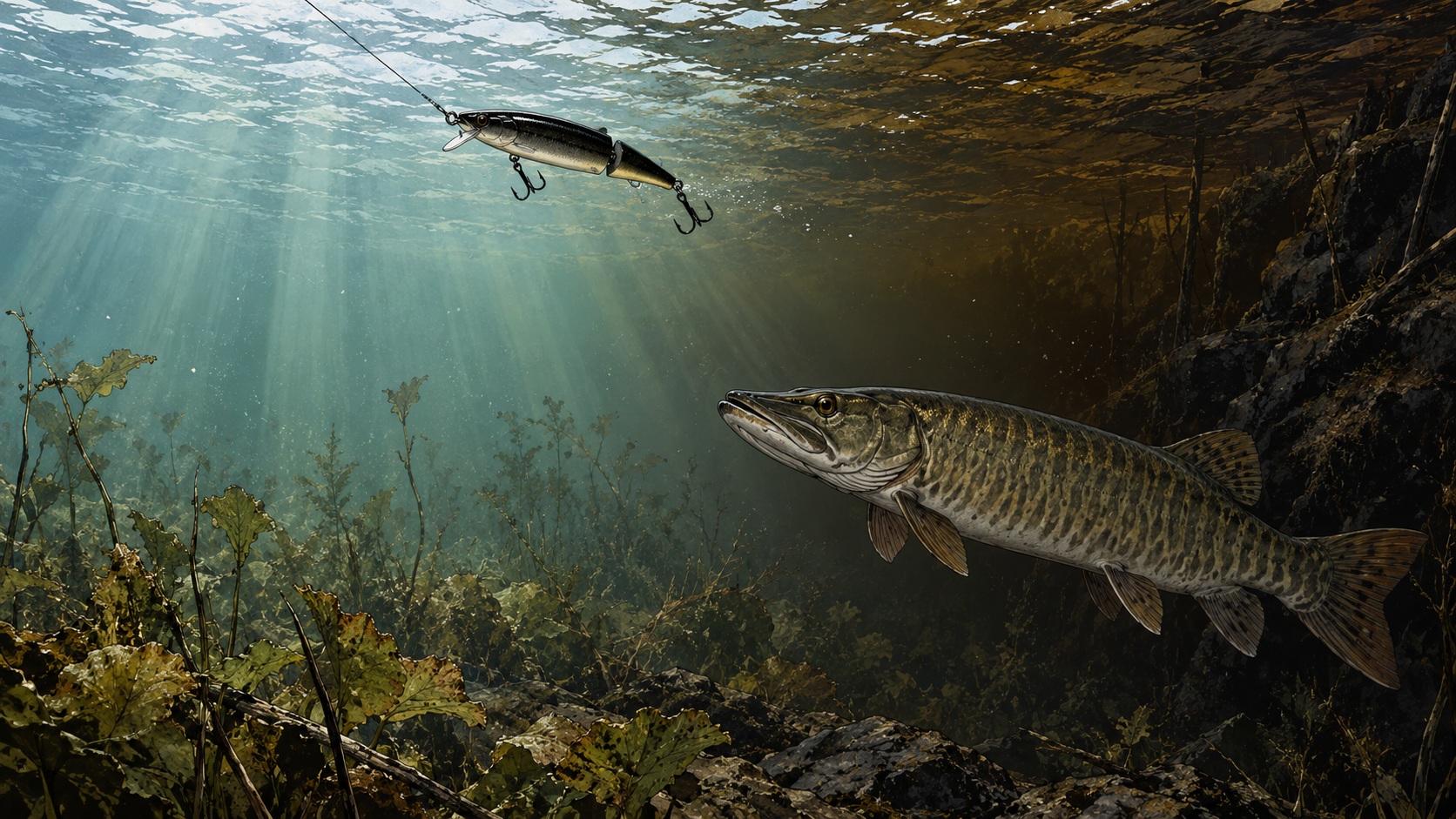
The Water Chooses What a Color Becomes
A lure has no fixed underwater signal. Background, light, depth, and water color decide whether its paint becomes contrast, camouflage, or noise.
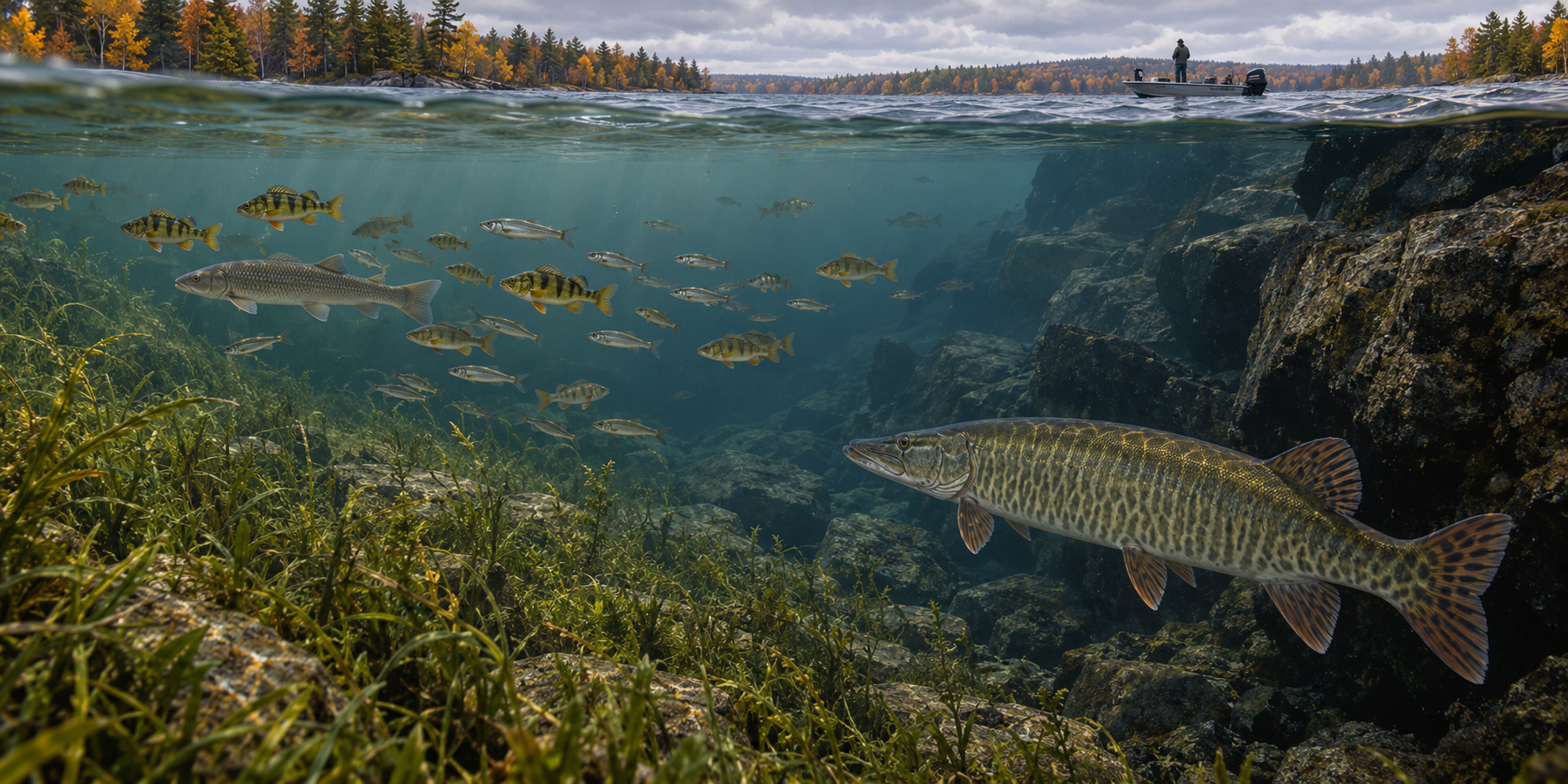
The 40 Percent Rule Is Not a Law
Wild Wisconsin muskies have eaten fish from 6 to 47 percent of their own length. Prey shape, handling cost, availability, and opportunity keep one ratio from choosing every lure.
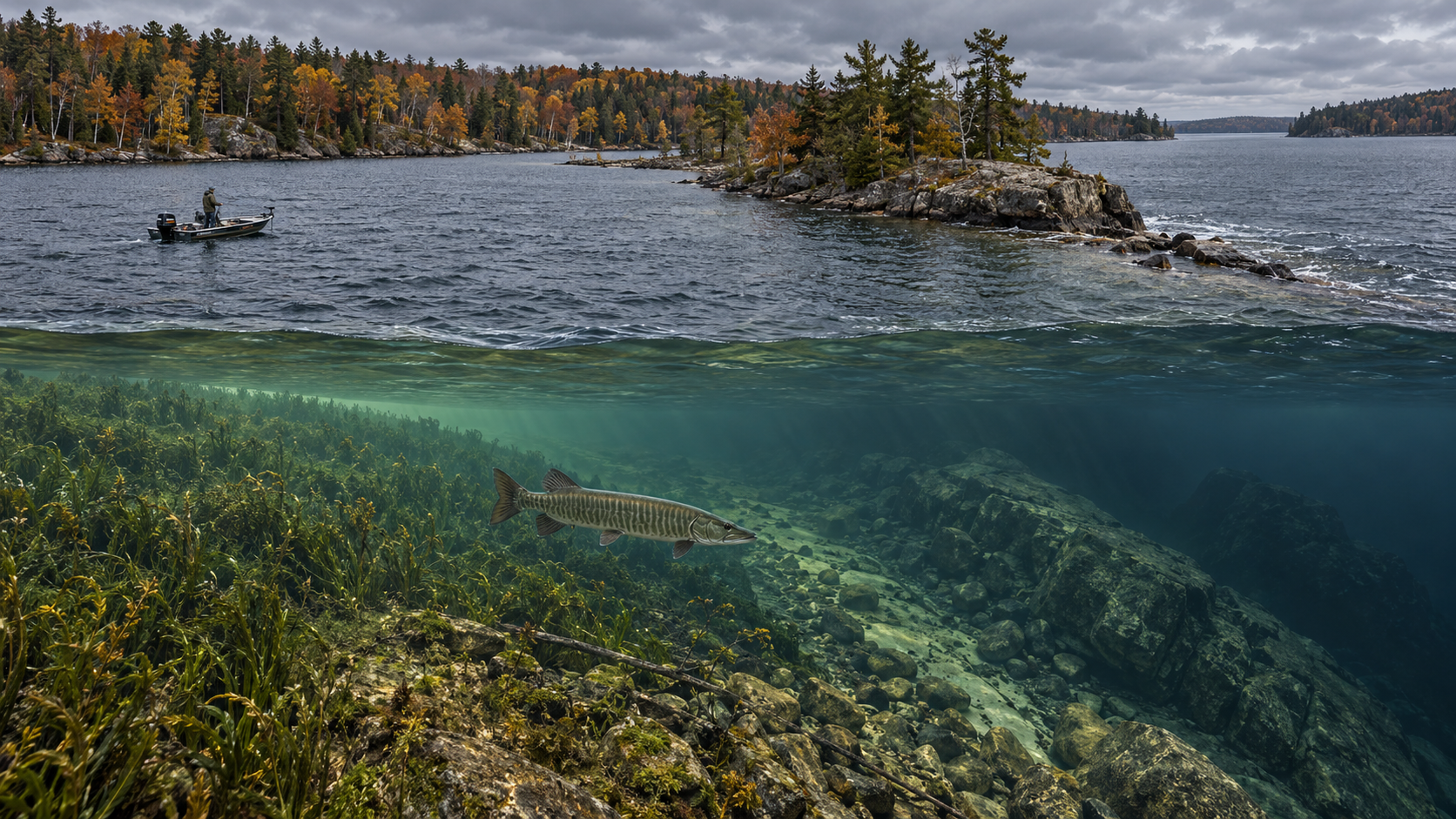
A Home Range Is Not a Private Address
A musky can reuse part of a lake without owning one spot. Home ranges can overlap, shift by season, and change with waterbody scale, flow, fish size, and individual behavior.
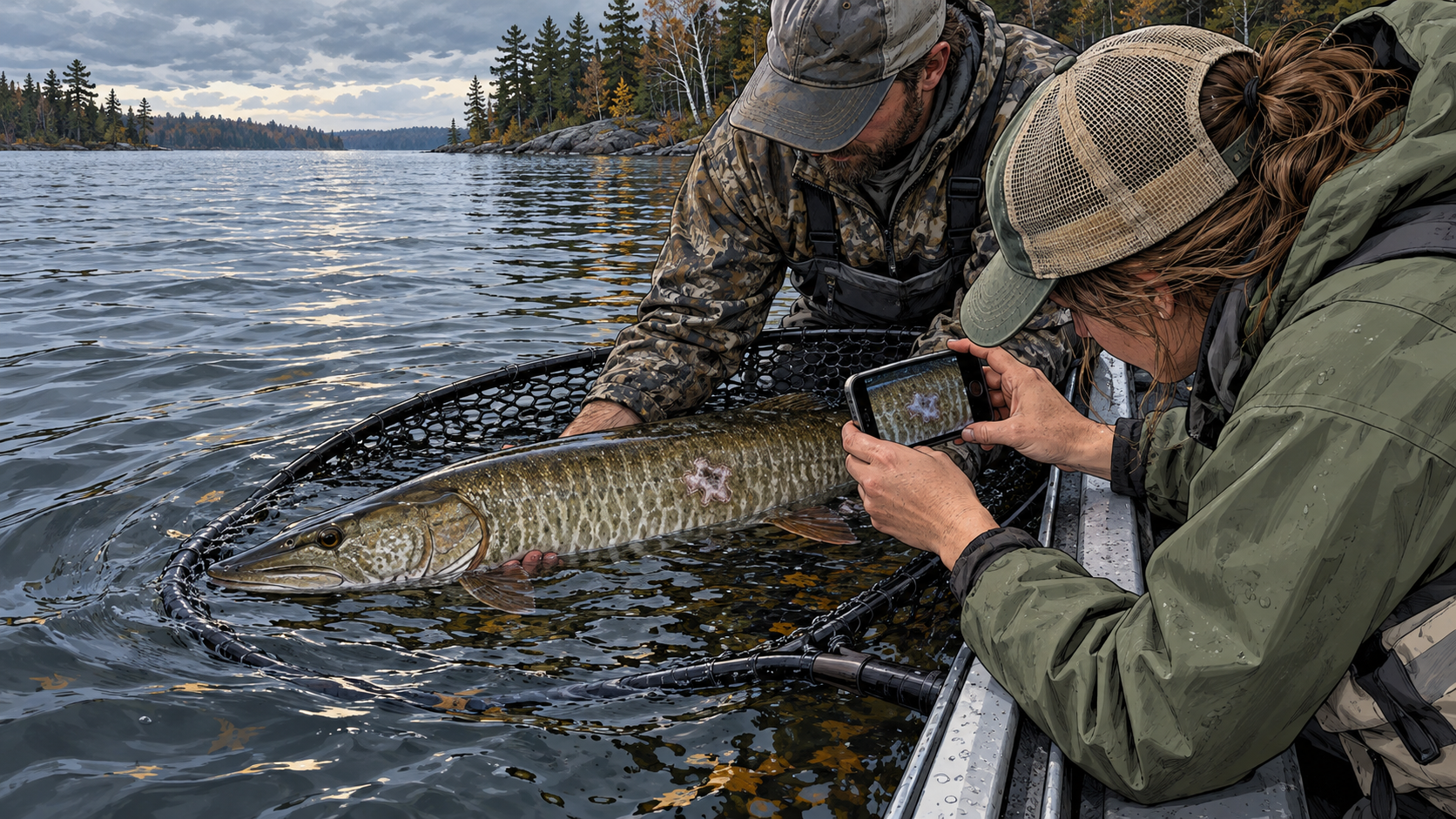
The Lesion Needs a Record, Not a Guess
An unusual mark on a musky can be injury, infection, a parasite, abnormal tissue, or something else entirely. A useful angler report preserves what was seen without naming what only a laboratory can identify.
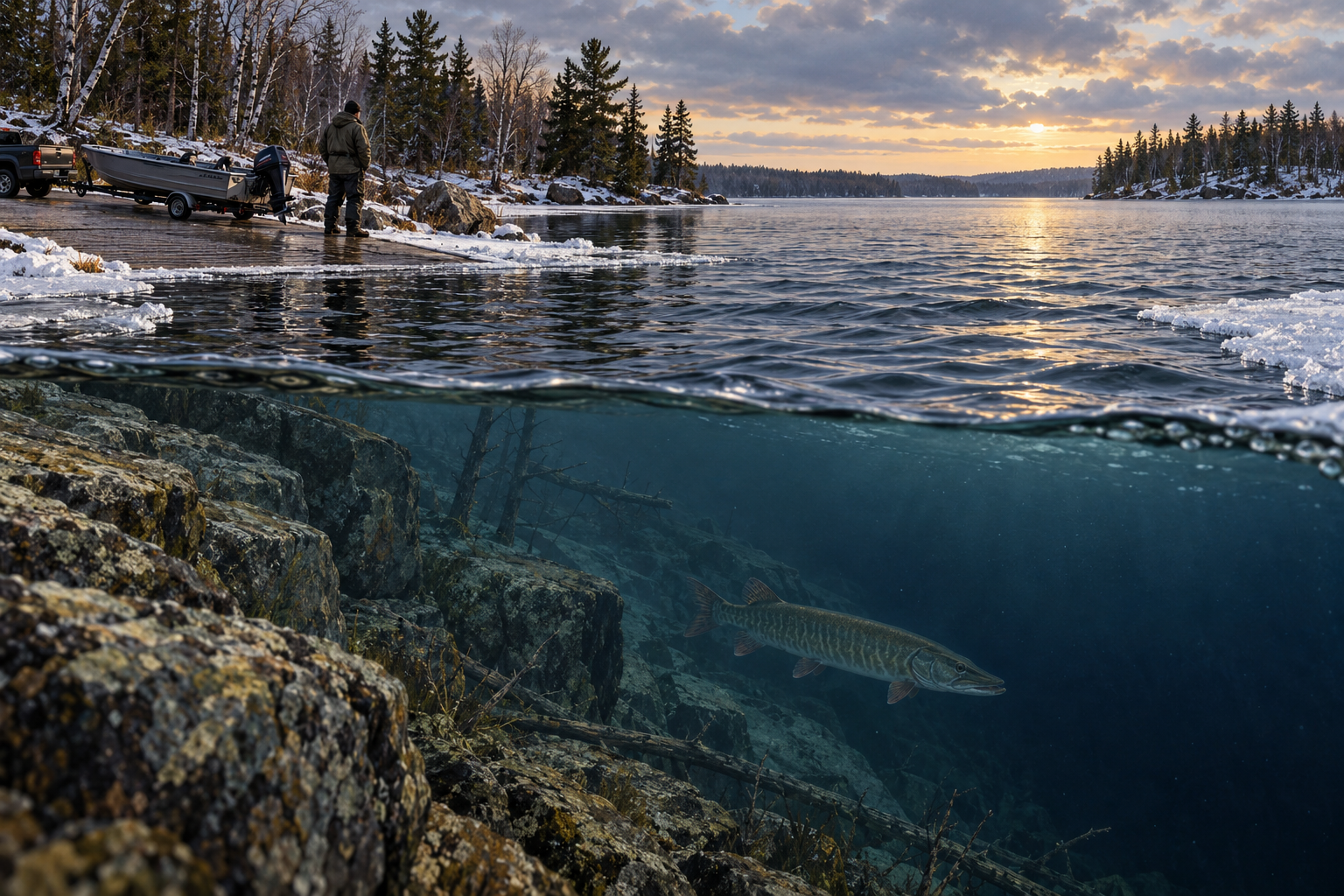
Wisconsin Moved the Musky Finish Line
Wisconsin's 2026 inland musky season opened statewide on May 2 and now runs through December 31 on open water. The longer calendar changes opportunity, not fish biology, weather, safety, or the rules on every boundary water.
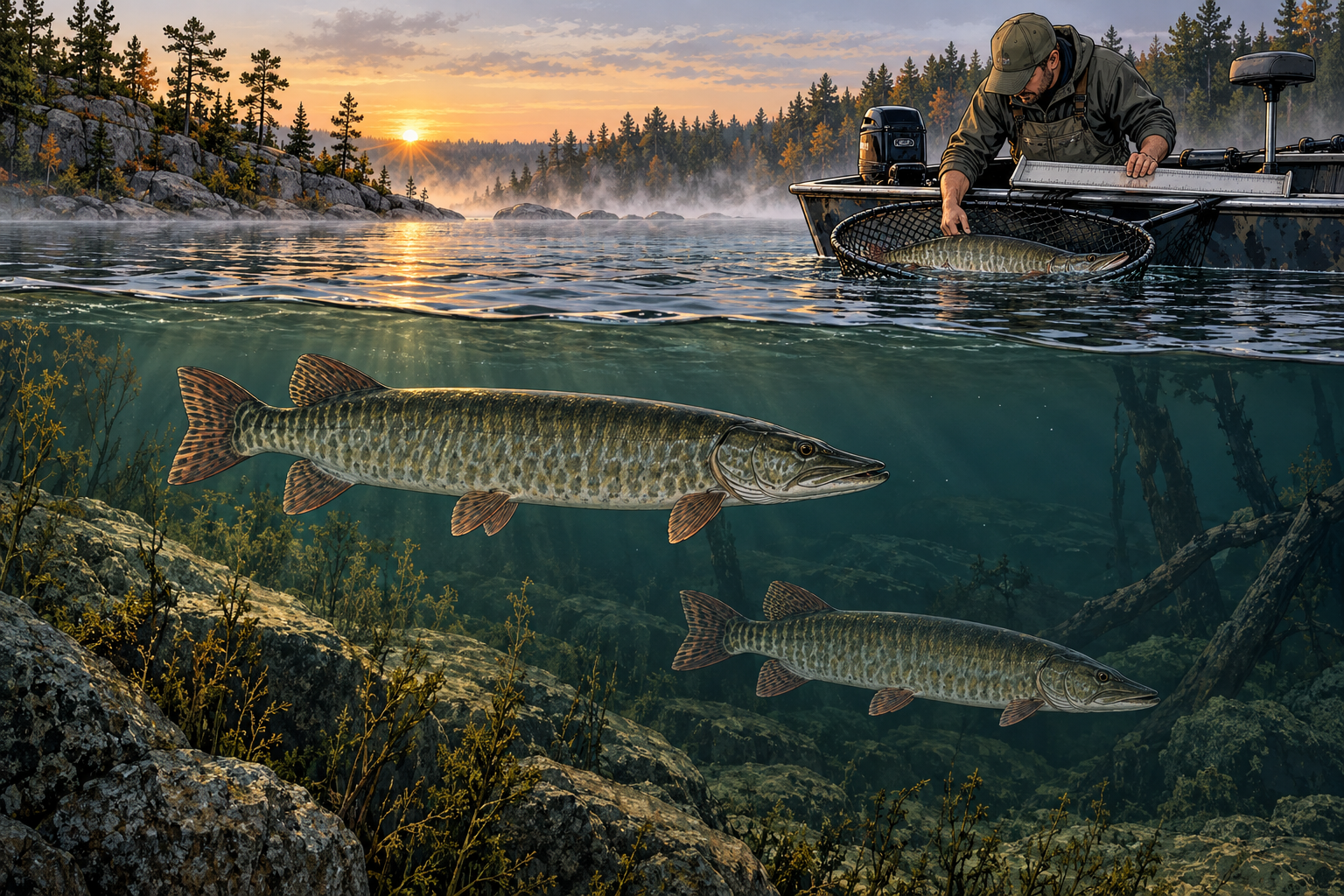
Length Is a Clue, Not a Sex Test
Female muskies grow larger on average. That changes the odds, not the identity of the fish in the net. A confident sex label needs anatomy, a verified record, or the honest word unknown.
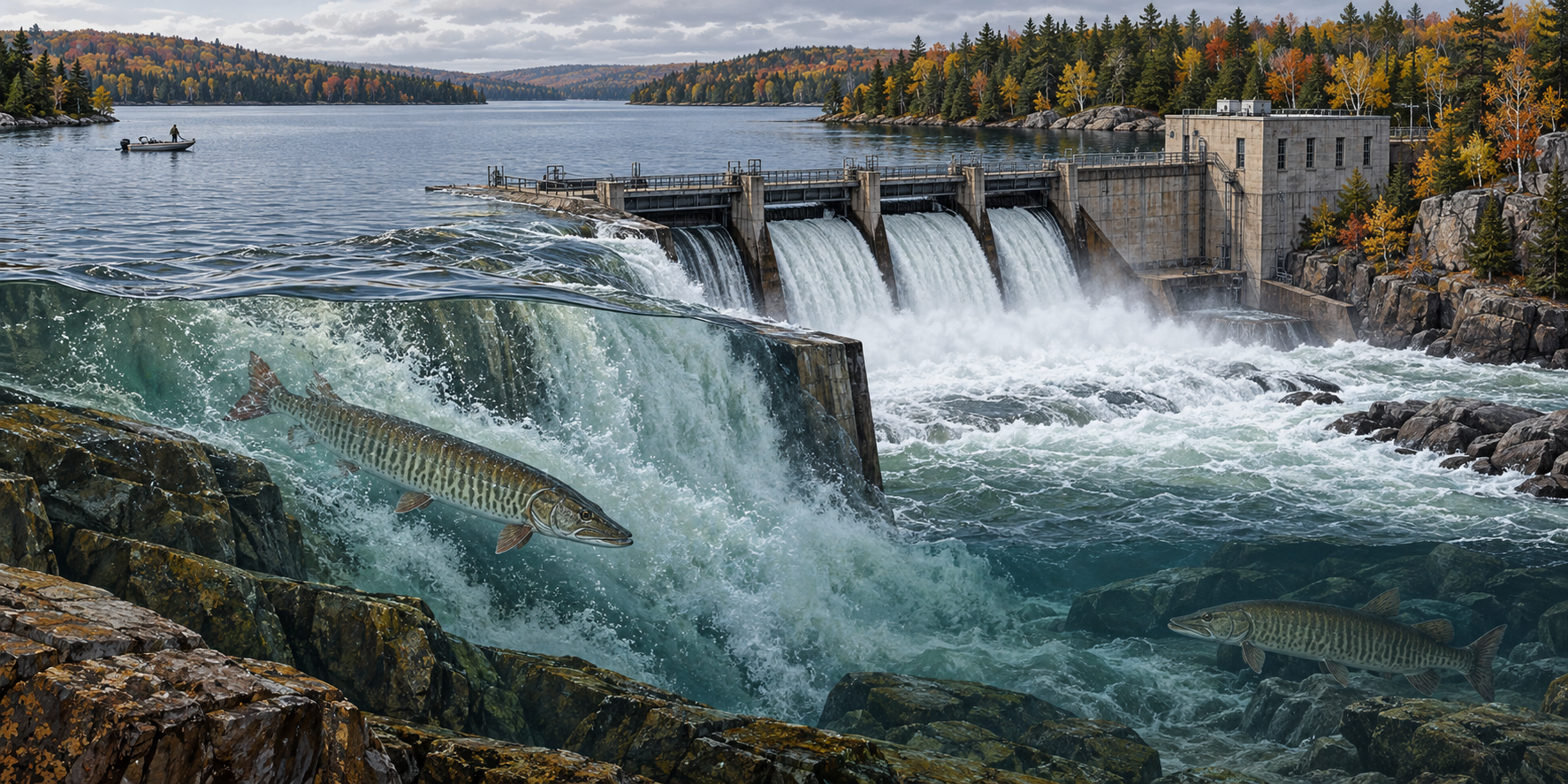
The Dam Is Not the End of the Musky Map
Long-term tagging shows that adult muskies can leave some reservoirs in numbers large enough to change the fishery, then persist for months below the dam. A reservoir and its tailwater may need to be read as one system.
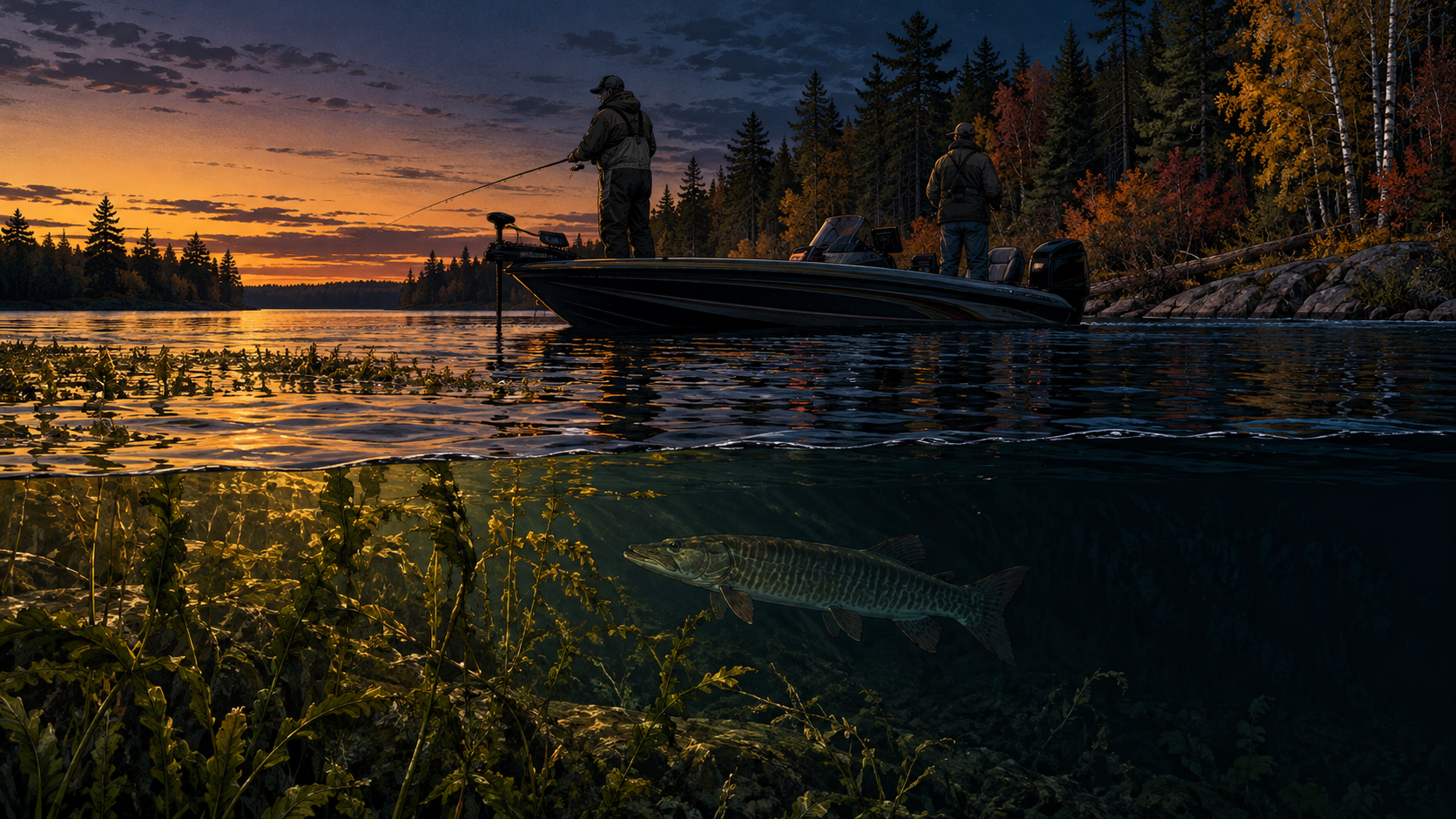
The Clock Does Not Turn Musky Behavior On
One telemetry study found summer activity peaking at dusk and fading after dark. Another found juvenile summer movement higher at night than at twilight. The useful pattern is the one a fishery proves.
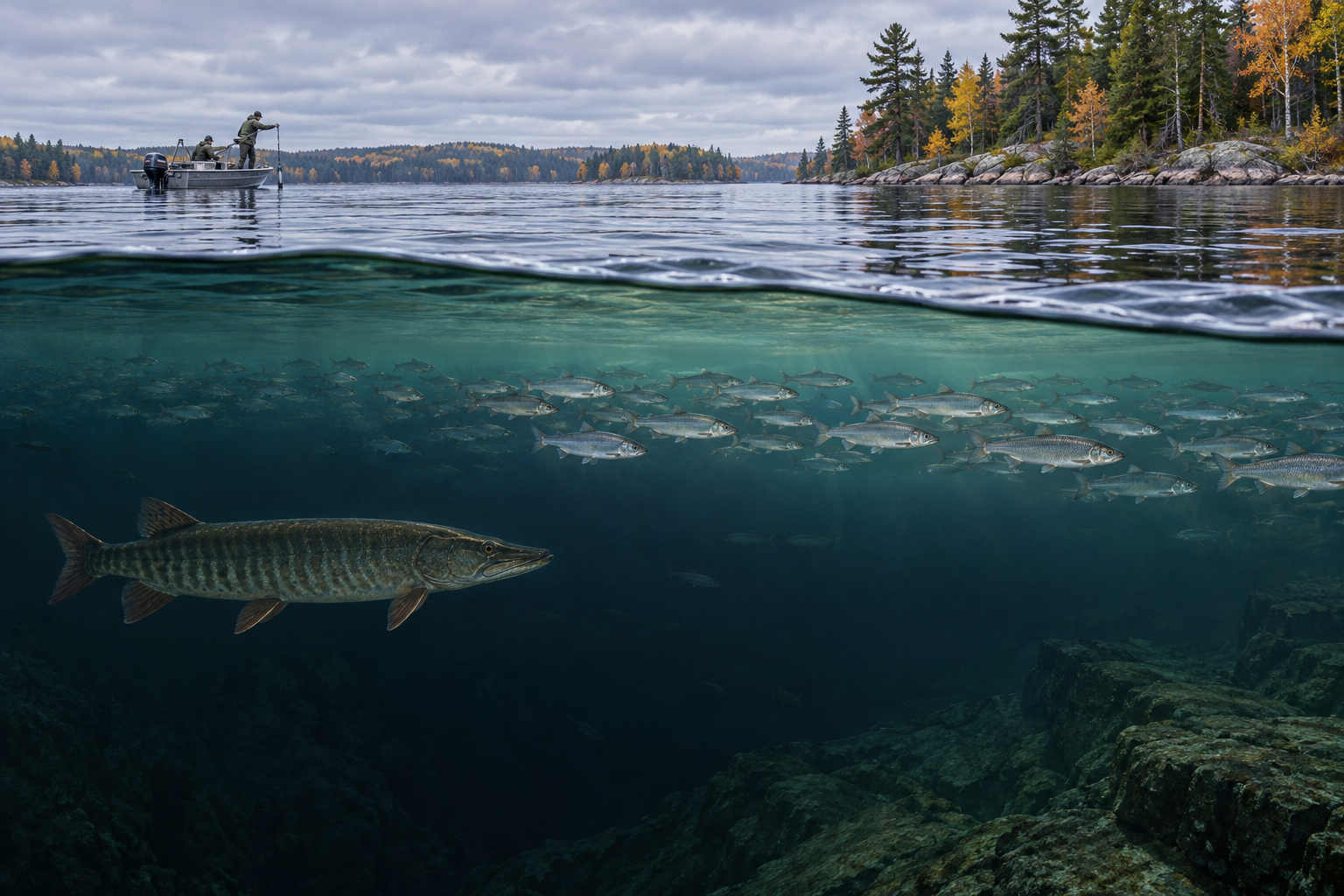
The Cisco Layer Has Two Walls
Coldwater forage needs cool water and enough oxygen at the same time. New Wisconsin research shows that the usable band can narrow to almost nothing, which makes surface temperature an incomplete fishing map.
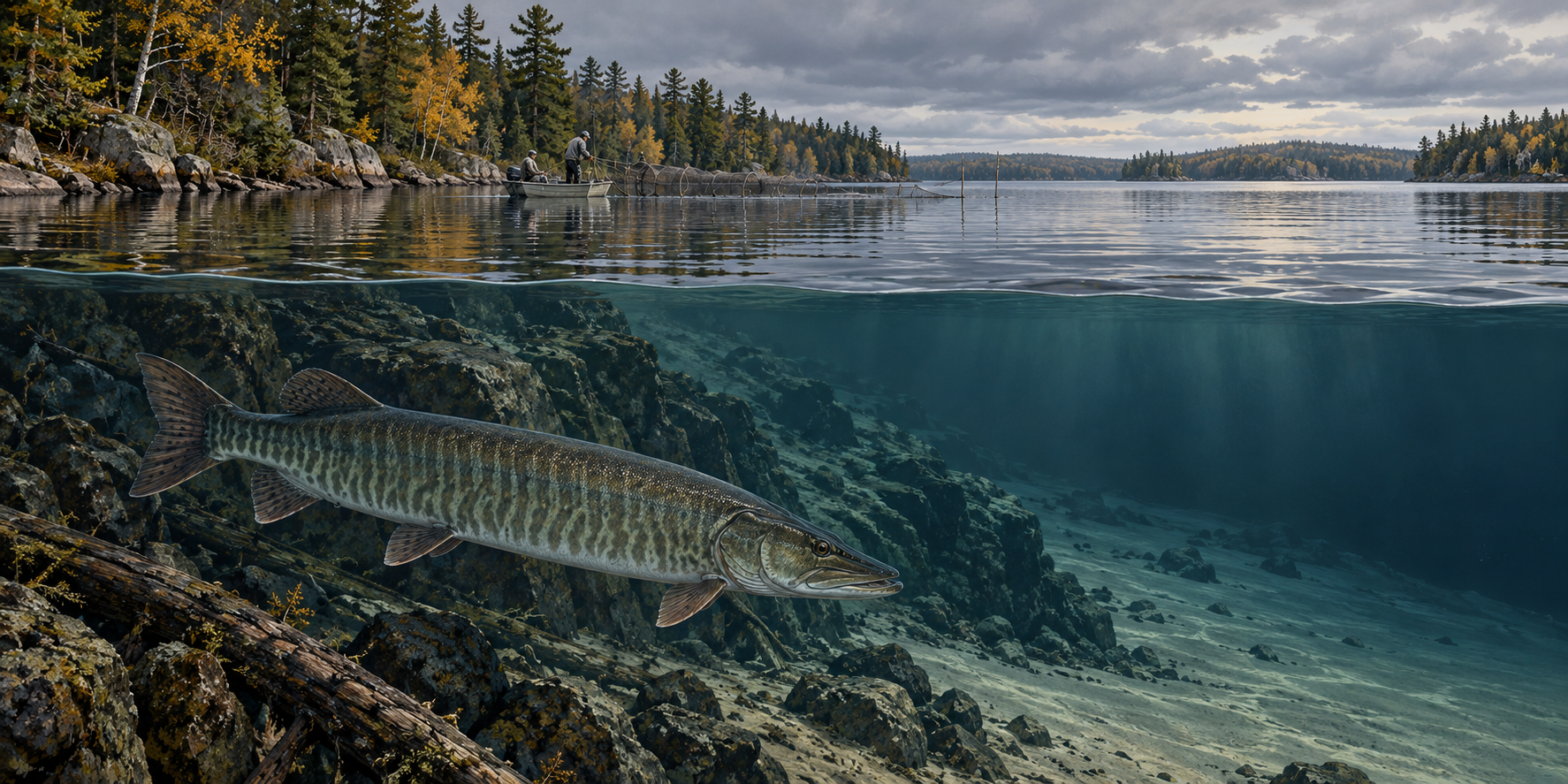
One 51-Inch Fish Cannot Describe a Lake
Big Muskellunge Lake's 2026 survey found a 51.3-inch female and a low adult catch rate. Both are true, and neither can stand in for the fishery.
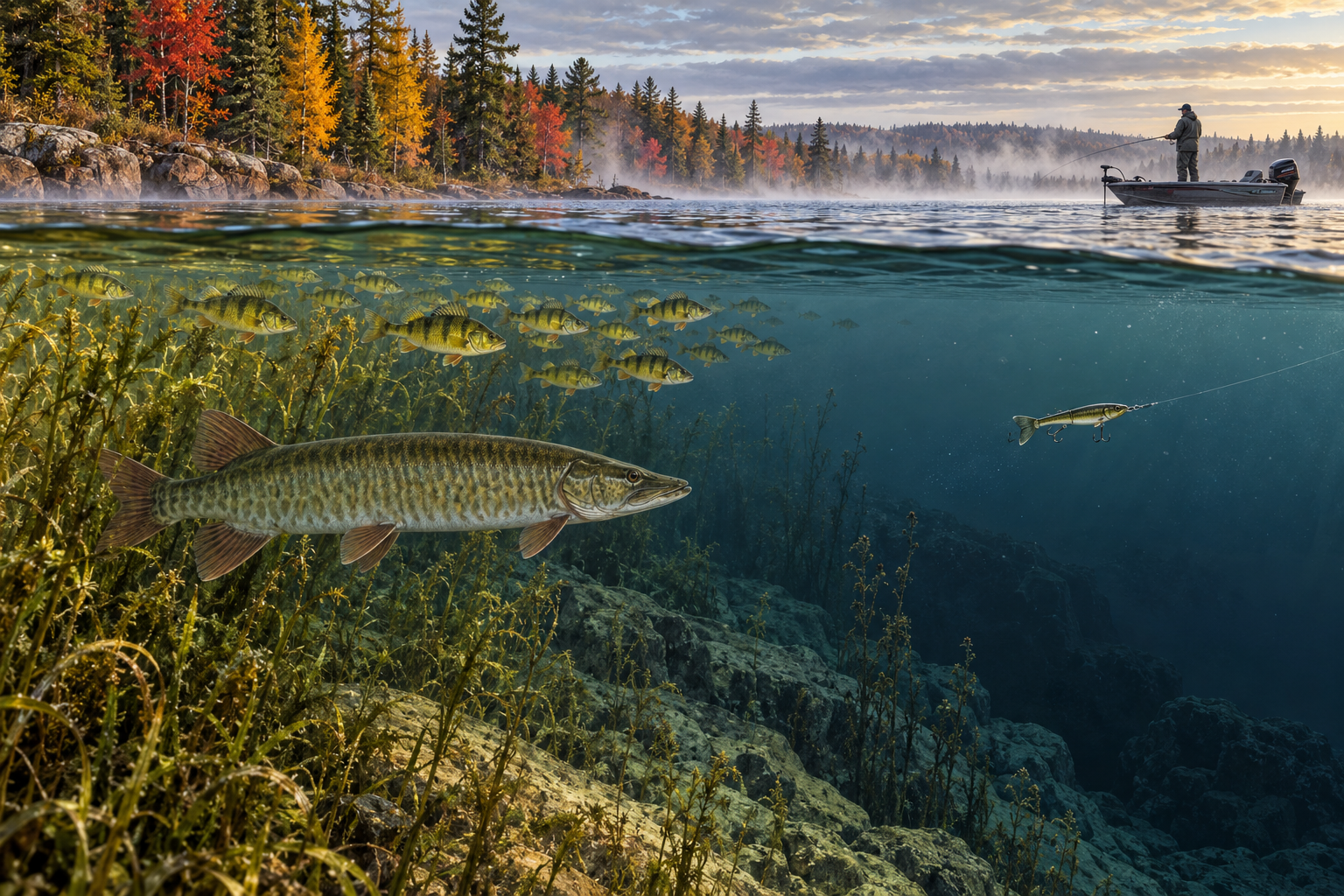
Cold Water Does Not Turn a Musky Into a Furnace
Fall can improve prey access, expand movement, and create sharp feeding windows. It does not reverse fish physiology or make every musky hungry all day.
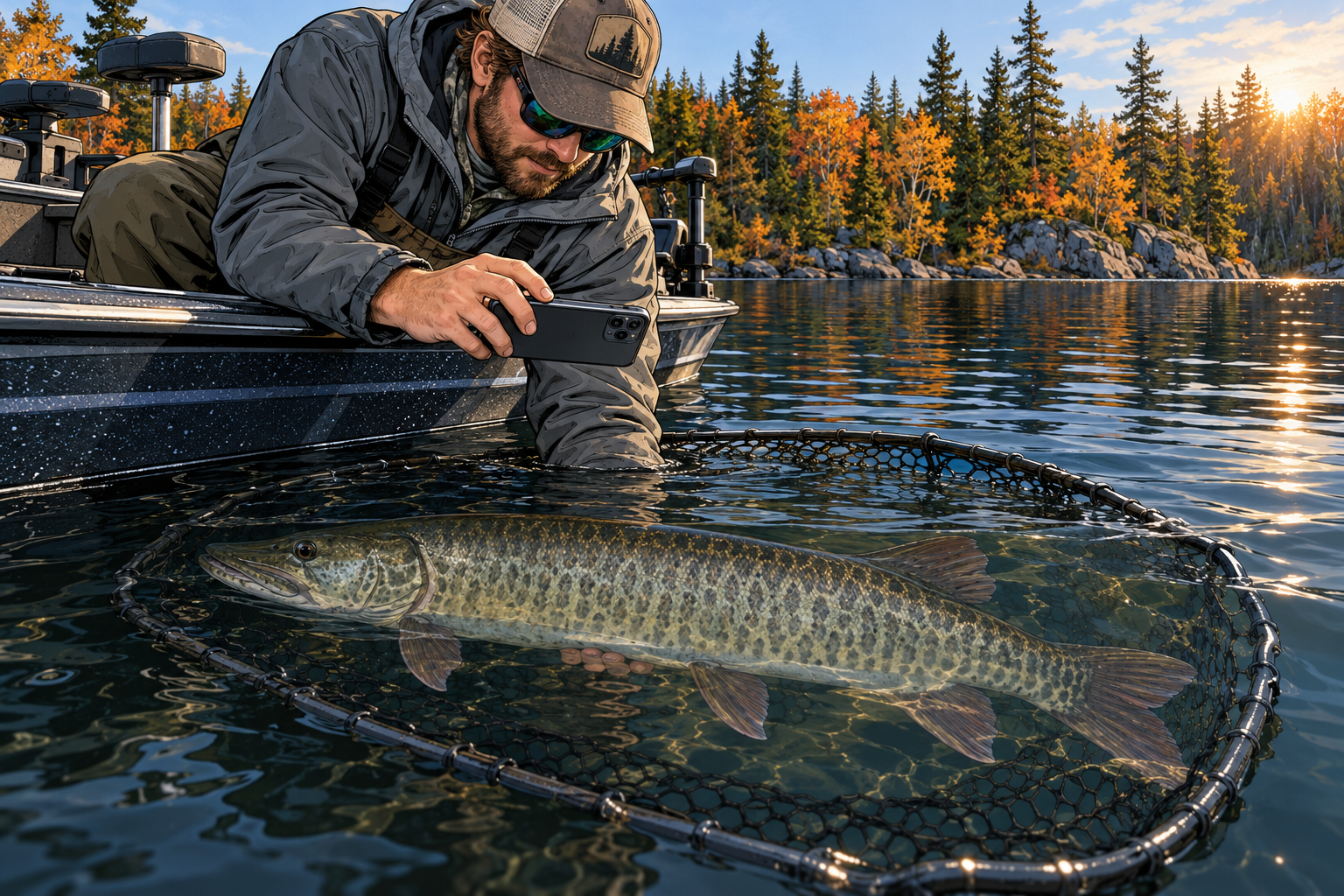
A Photograph Can Become a Tag
A clean flank photo may identify the same musky again without adding a physical mark. The useful record begins with consistency, restraint, and honest uncertainty.
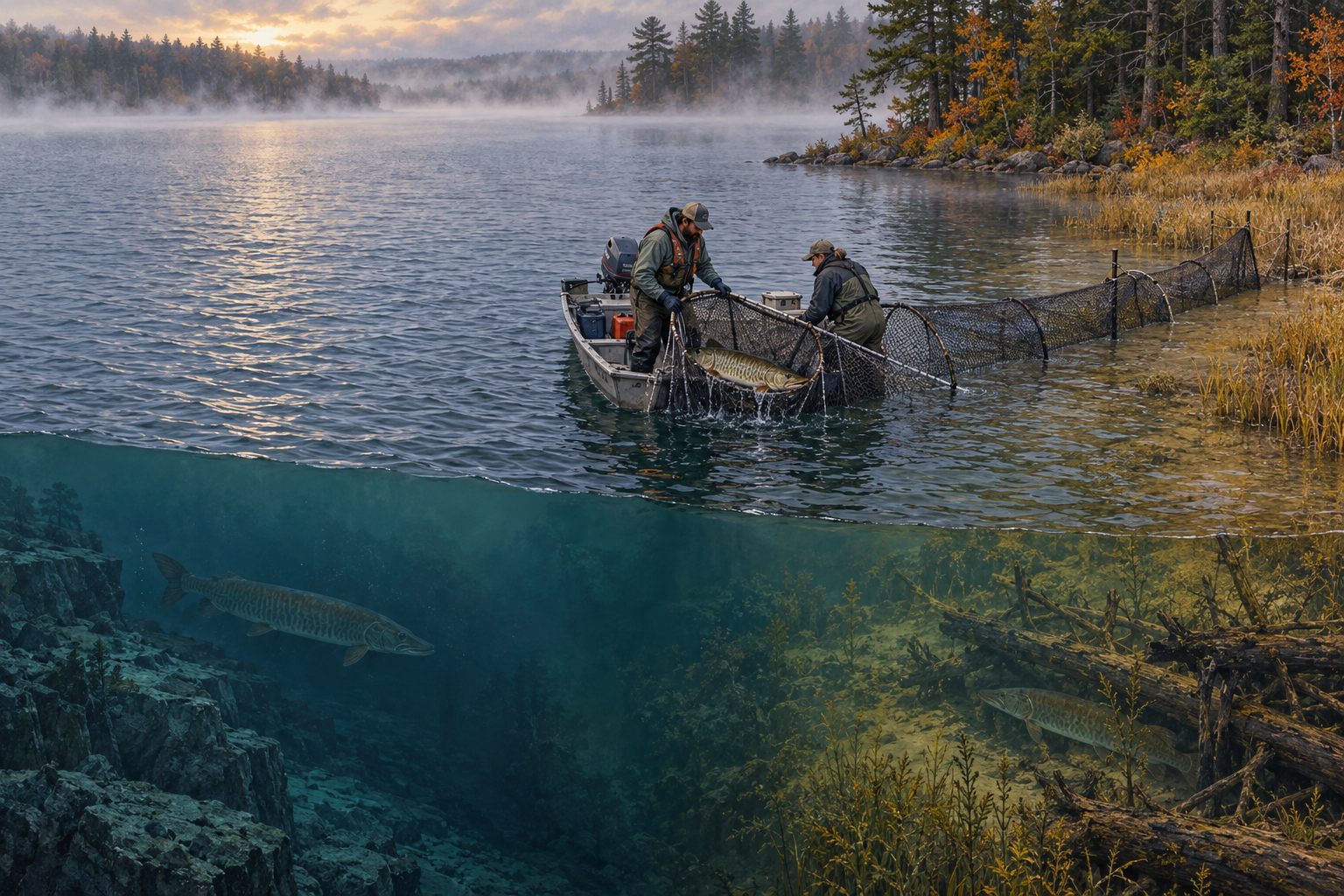
A Net Is a Lens, Not a Census
A fisheries survey sees the fish that a particular gear can encounter at a particular place and time. The population estimate begins where that catch count ends.
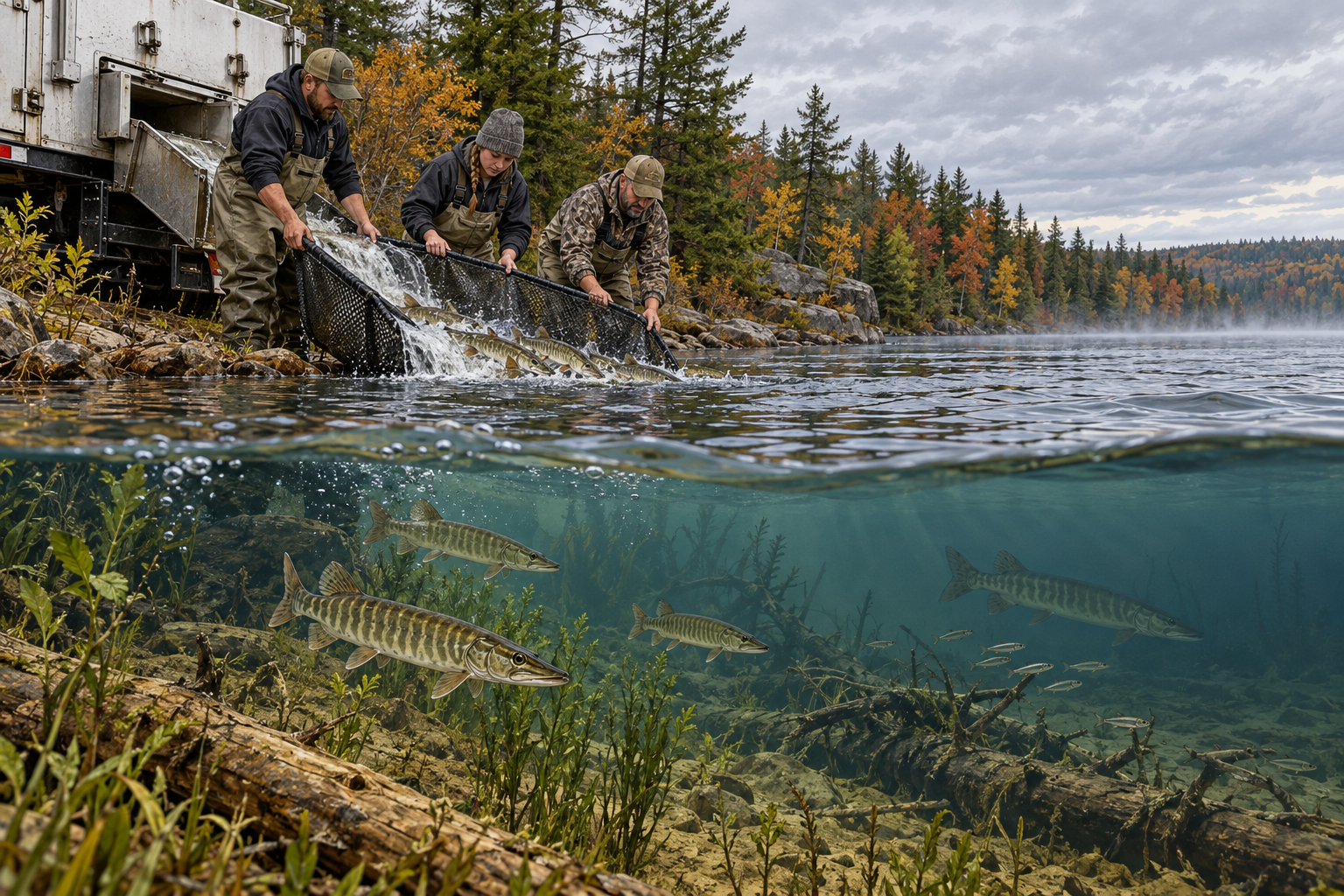
A Thousand Fingerlings Are Not a Thousand Muskies
The stocking count records fish entering a lake. Length at release, local survival, and years of exposure decide how many join the adult fishery.
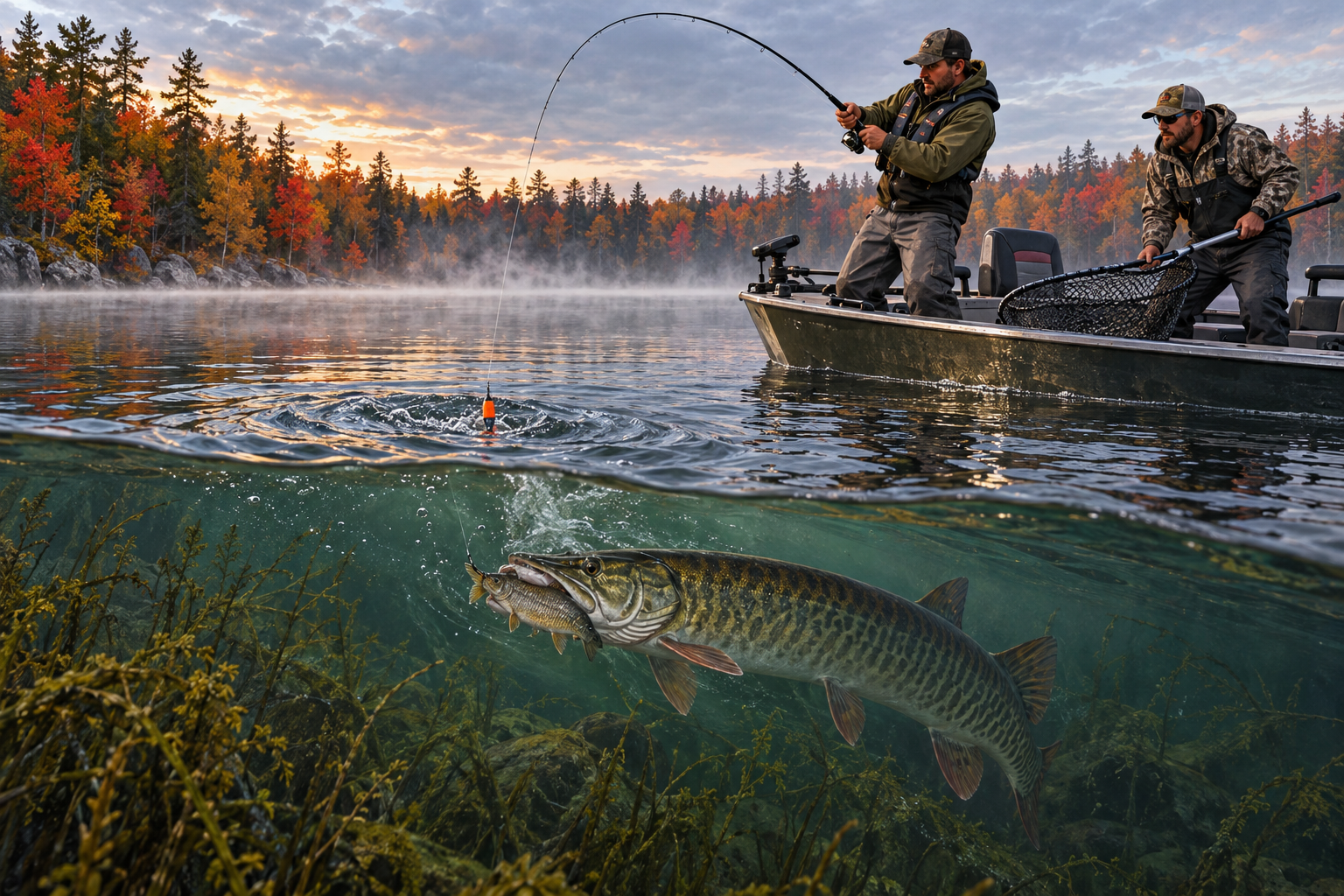
The Bite Clock Starts Before the Hookset
With big live bait, release quality can be decided before the fish reaches the net. The rig matters, but the response to the first sign of a bite matters with it.
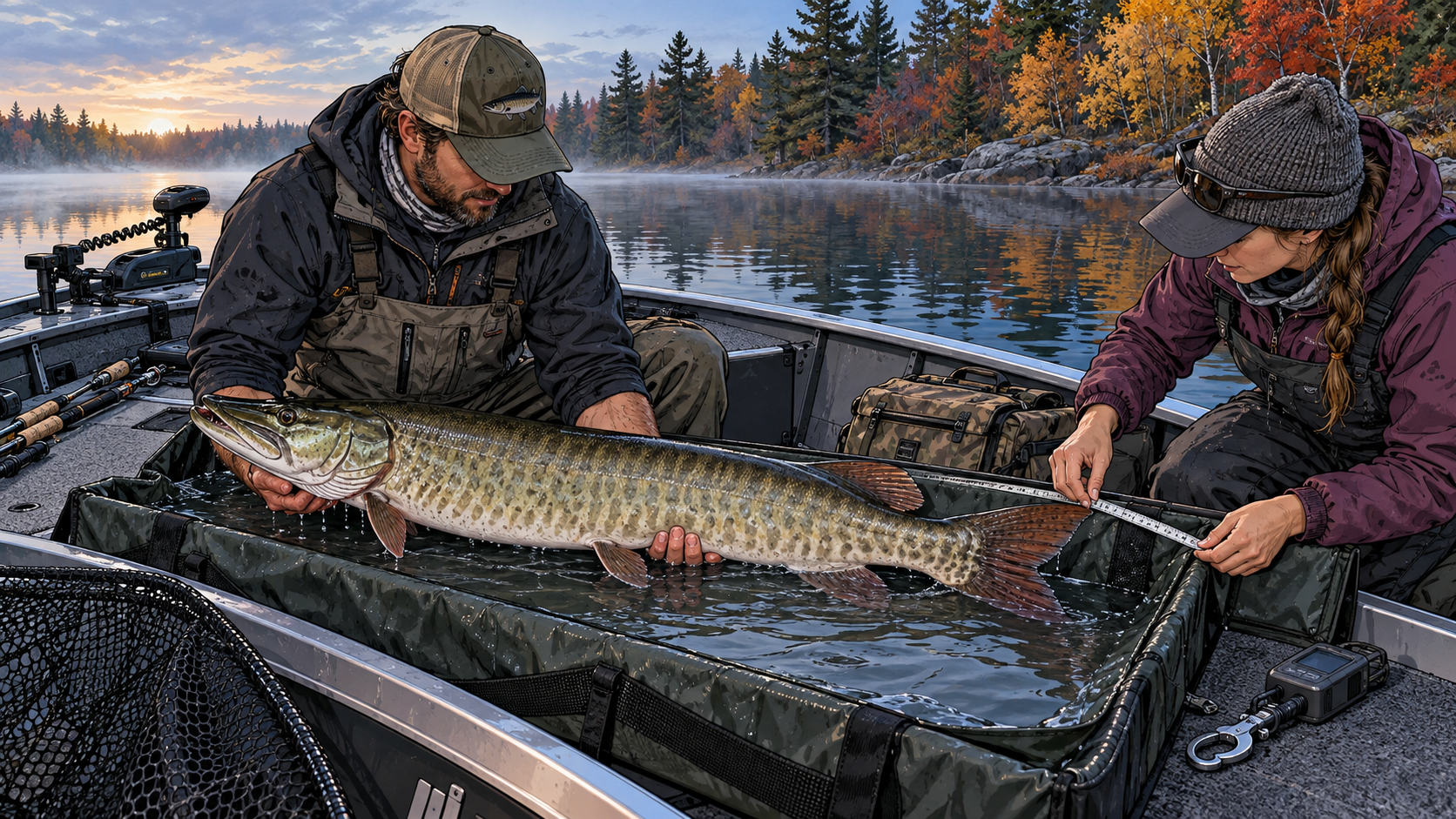
A Trophy Weight Needs a Method
A musky can be measured, weighed, or estimated. Those numbers become useful only when the method travels with them.
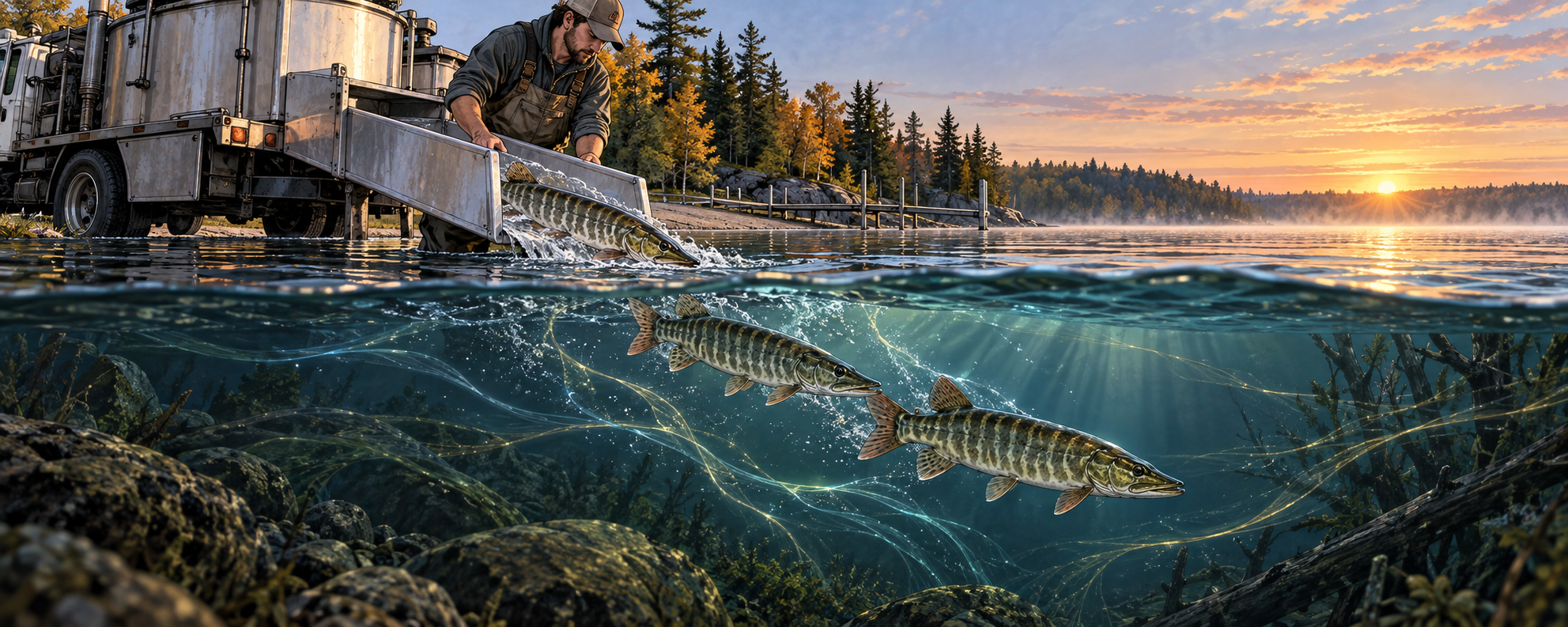
A Stocking Truck Carries a Family Tree
Every stocked musky arrives with ancestry. Genetics can reveal where that history came from, how it mixed with wild fish, and whether a stocking program is producing the result managers intended.
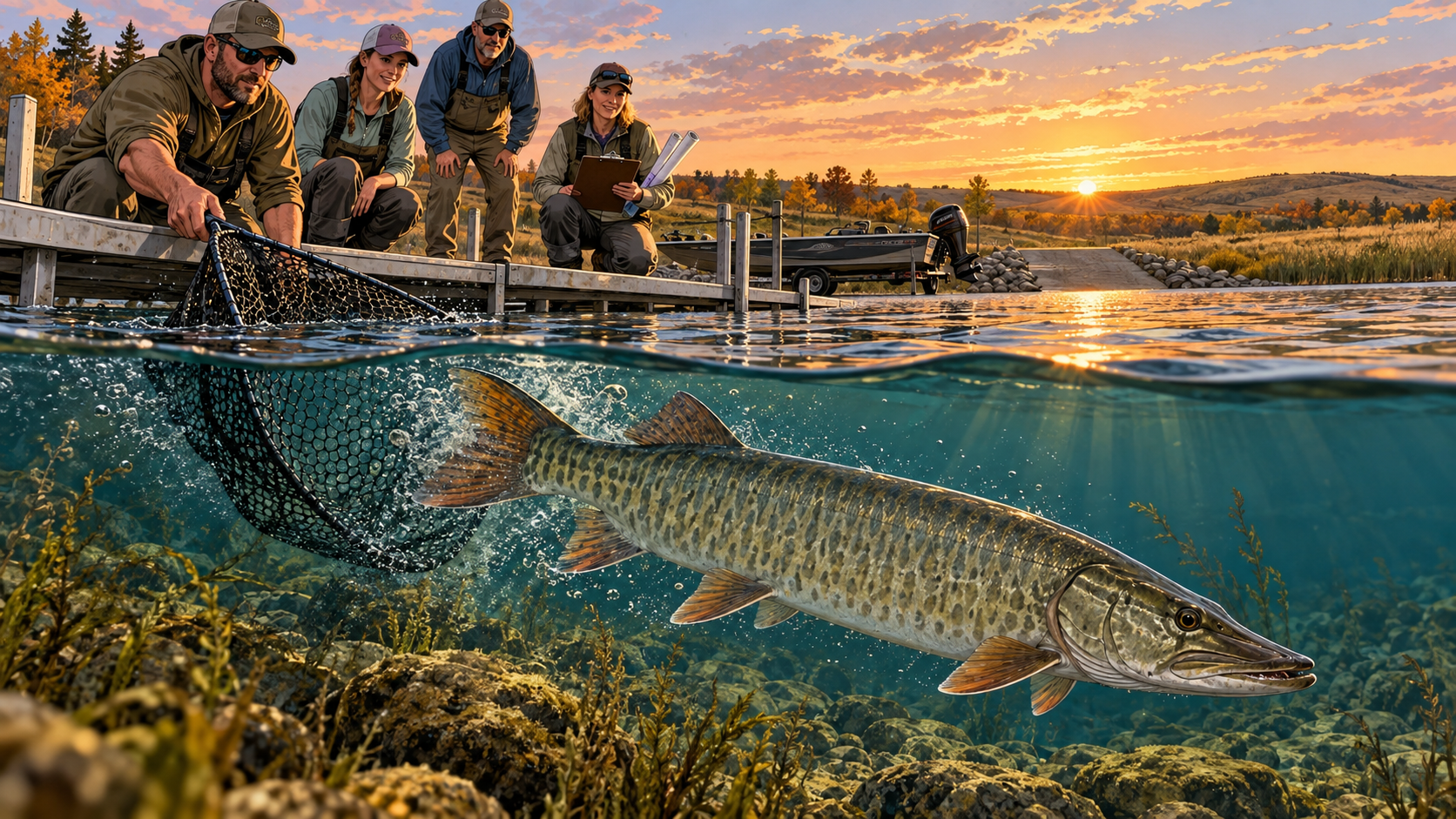
A Trophy Fishery Is a Public Decision
South Dakota considered reopening harvest of muskies at least 45 inches long. Anglers asked the commission to keep mandatory release, and the rule stayed.
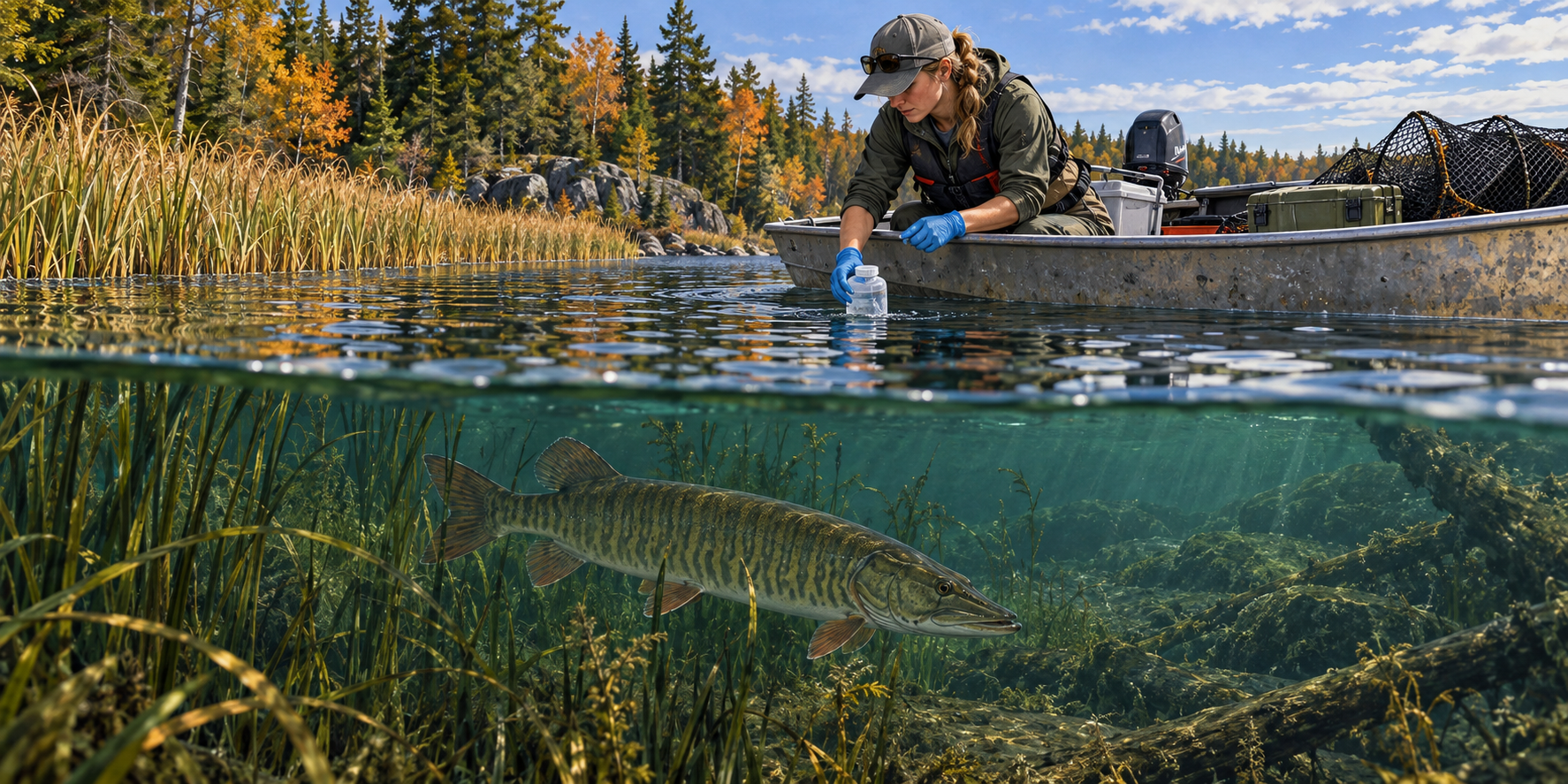
A Water Sample Can Find a Musky. It Cannot Count the Lake
Environmental DNA can reveal a fish that nets miss. The signal is powerful precisely when we refuse to make it say more than it measured.
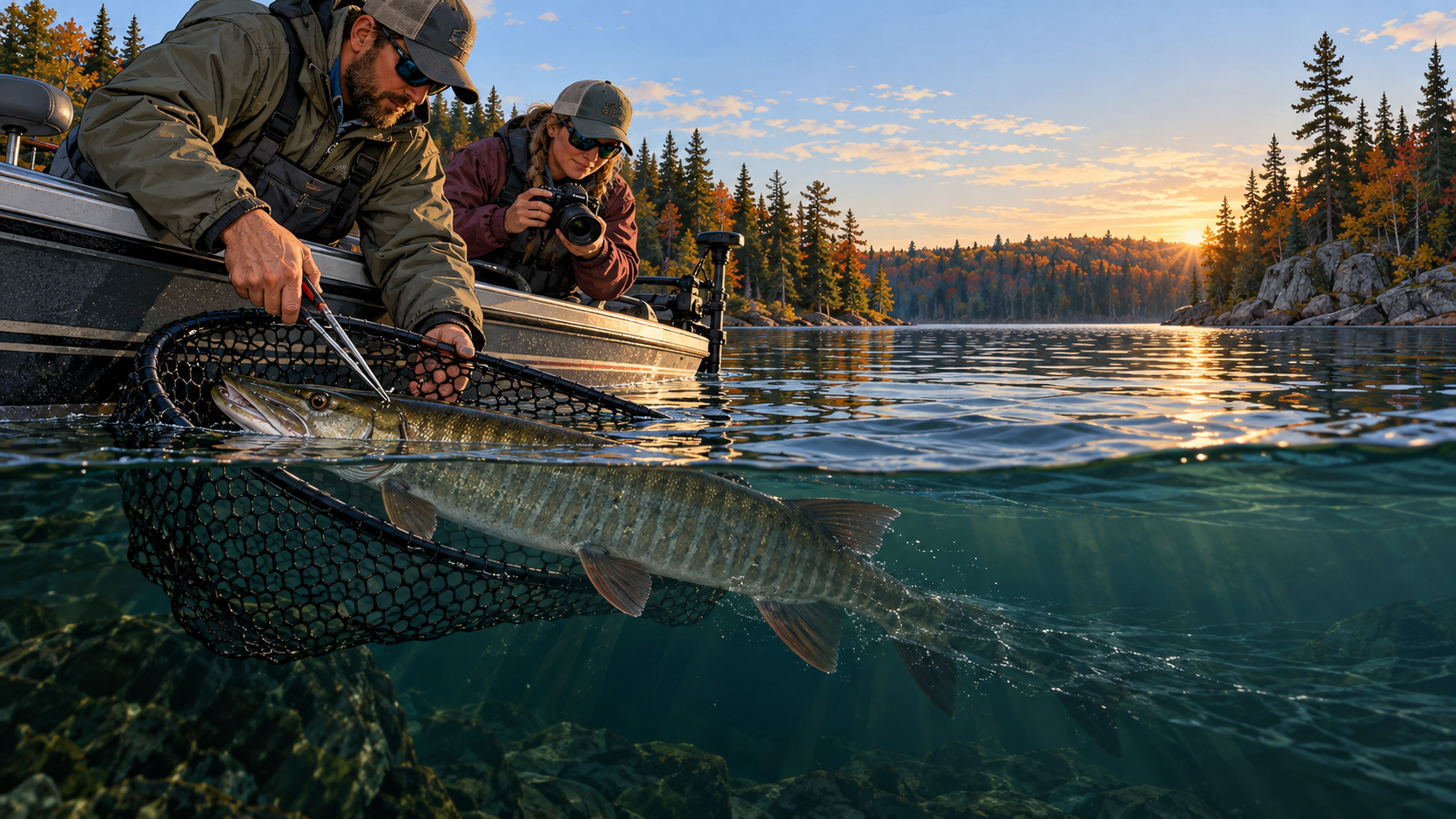
The First Kick Is Not the Finish Line
A musky that leaves your hand has passed an important test, but new biologging research shows that its recovery can continue for hours after it disappears.
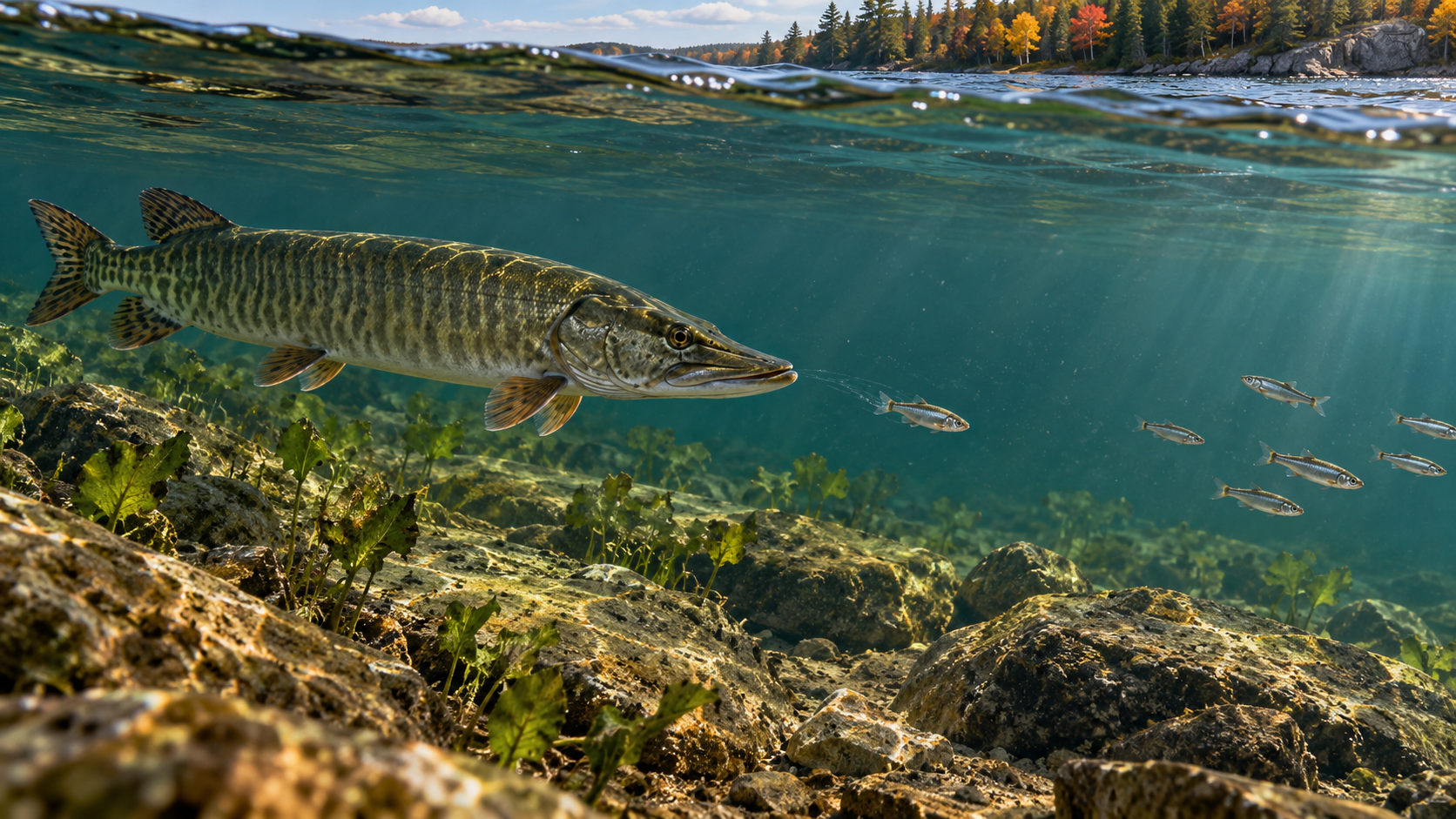
The Strike Changes Senses at Close Range
Controlled muskellunge research shows a sequence: vision finds and follows prey, then the lateral line helps organize the final lunge. A lure has to survive both parts of the decision.
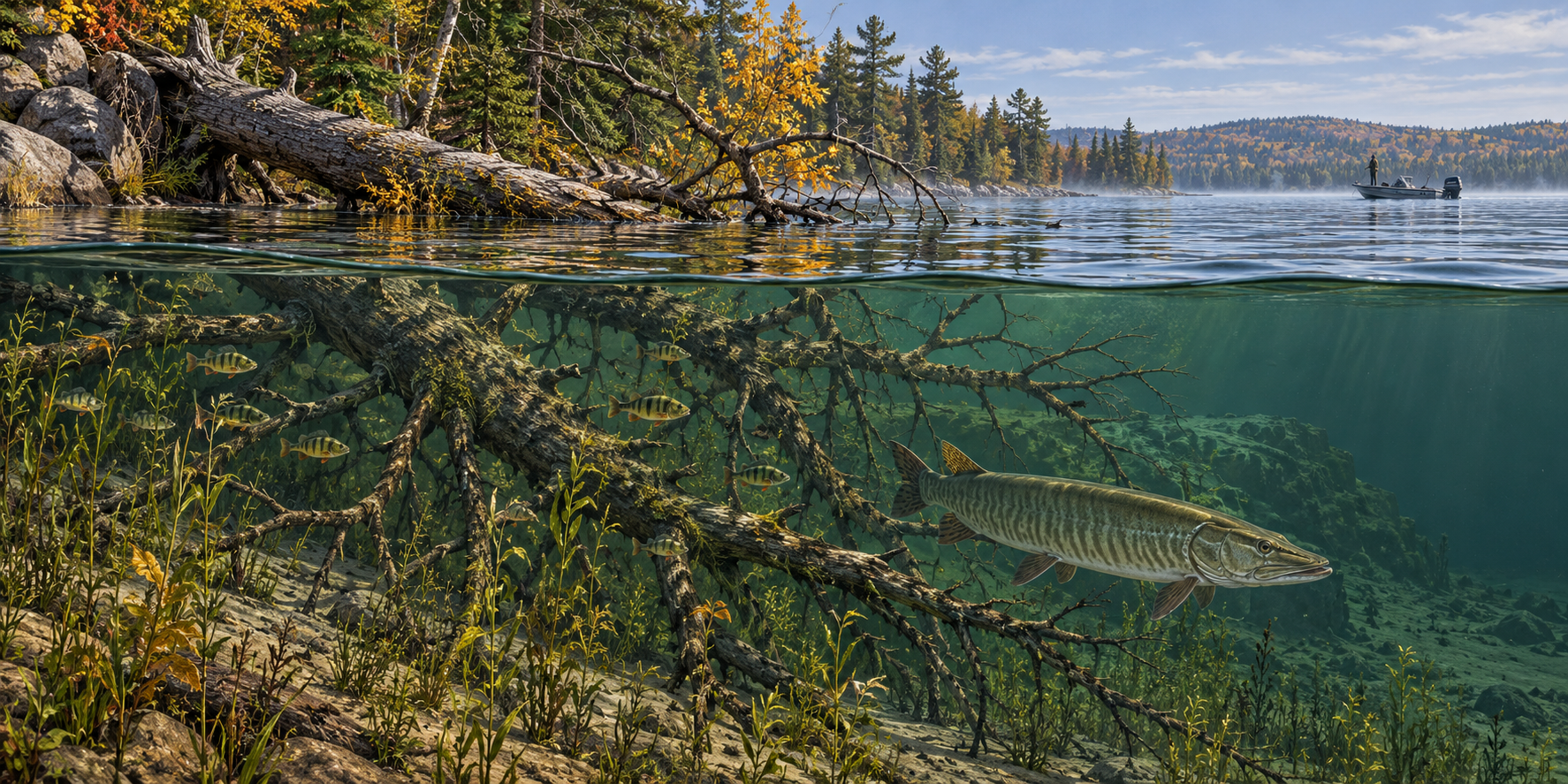
The Branches Matter More Than the Trunk
A fallen tree is not one piece of cover. Its forks, openings, depth, and relationship to nearby water help decide whether it functions as refuge, feeding lane, or dead end.
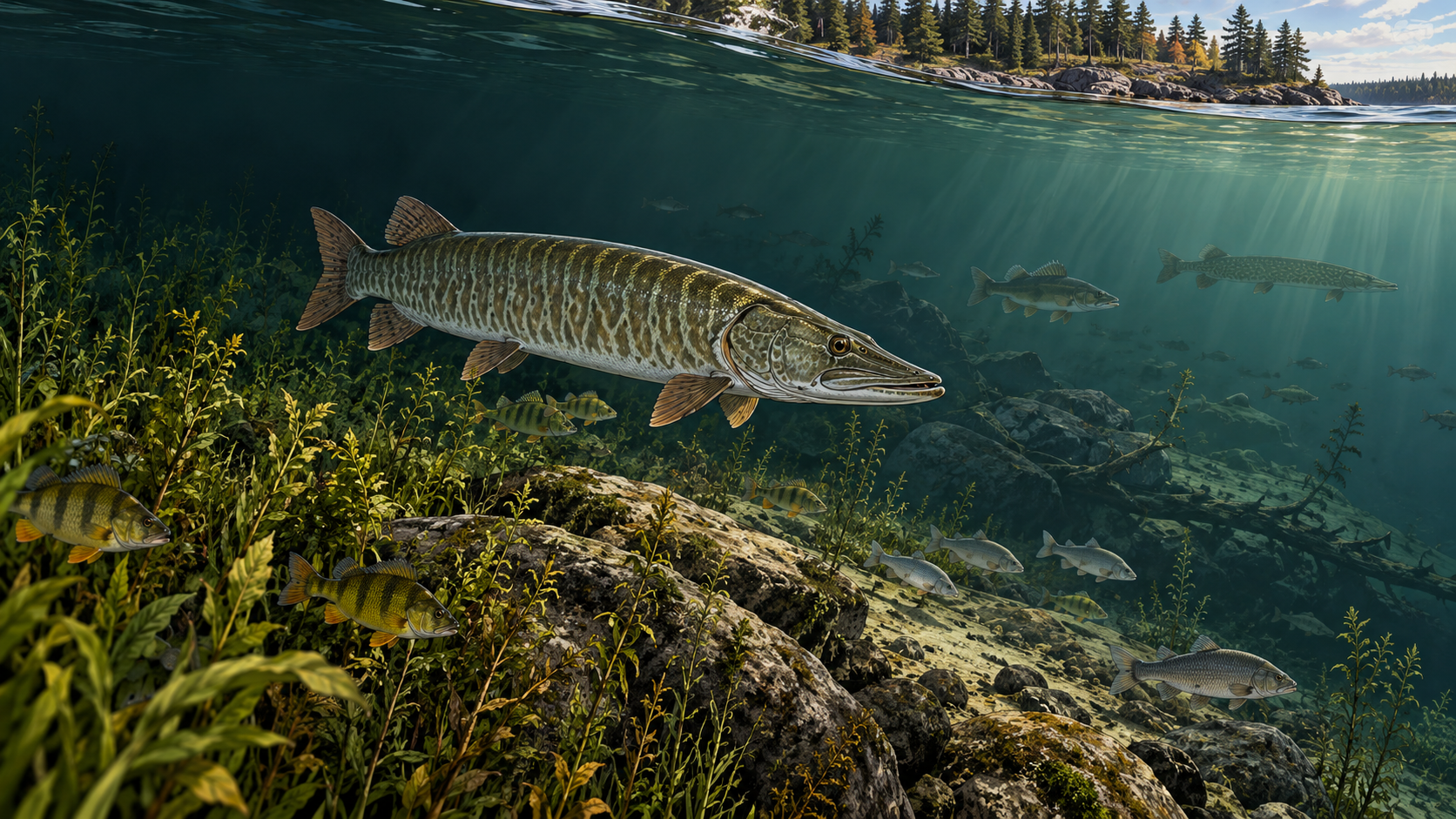
A Musky Is Not a Vacuum Cleaner
Large predators make easy suspects. Diet studies and paired-lake records show why one musky stomach, one bad walleye year, or one dramatic shoreline story cannot diagnose a fish community.
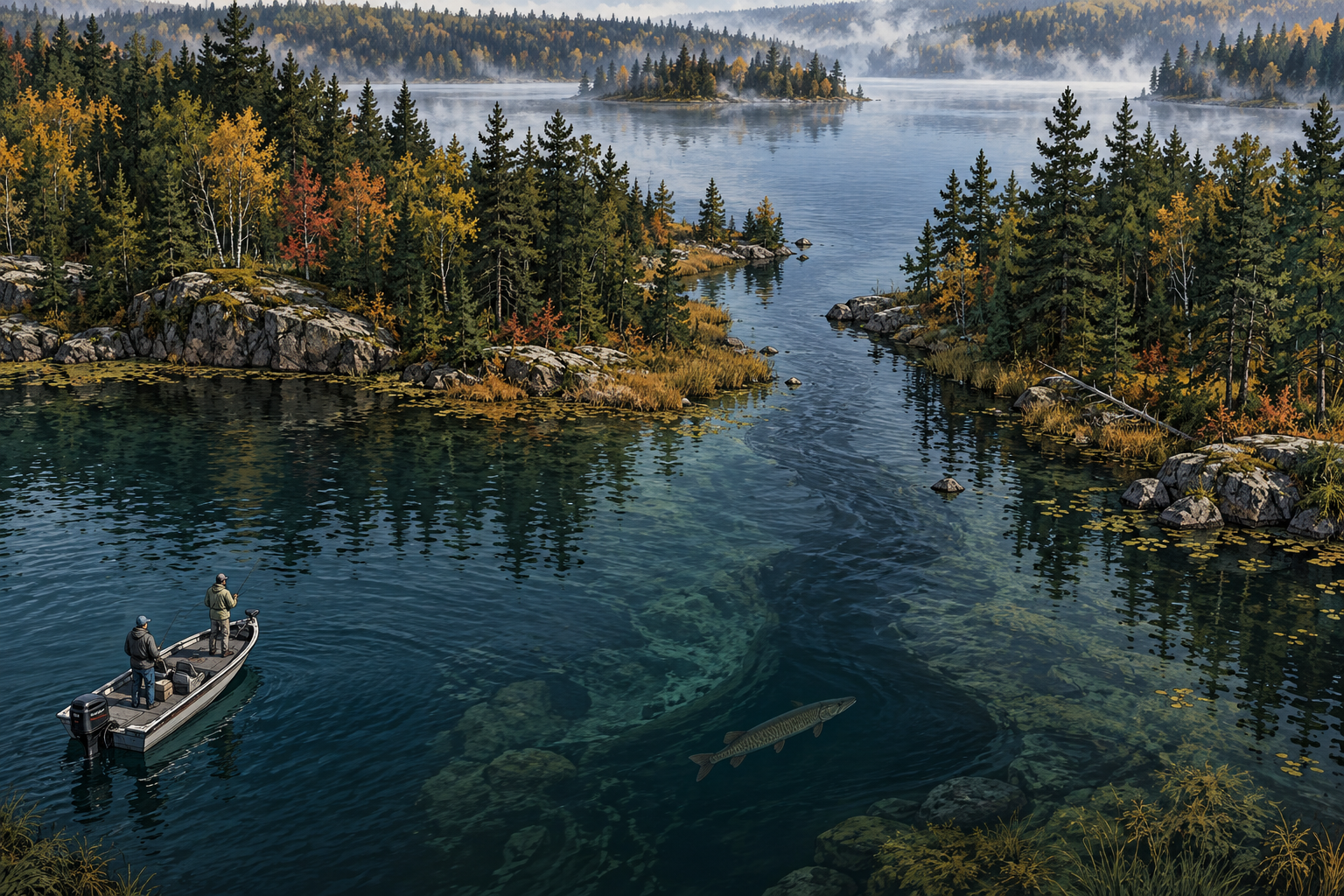
A Lake Name Is Not a Musky Boundary
Connected water changes the scale of the search. A musky may treat two named lakes, a channel, and a river reach as one seasonal neighborhood.
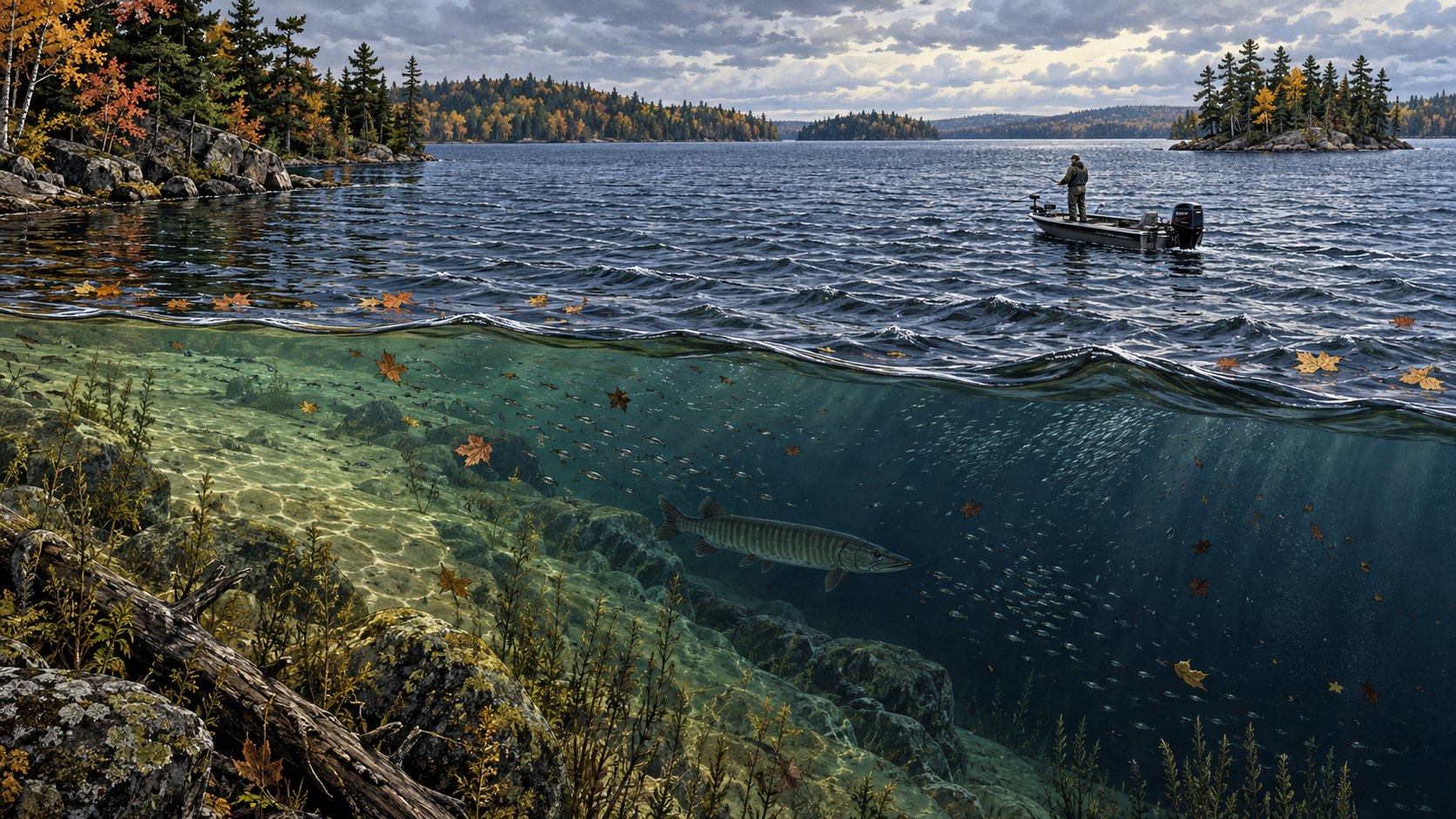
Turnover Is a Process, Not a Switch
Fall mixing changes the water column in stages. Read the lake before blaming one invisible event for every blank hour.
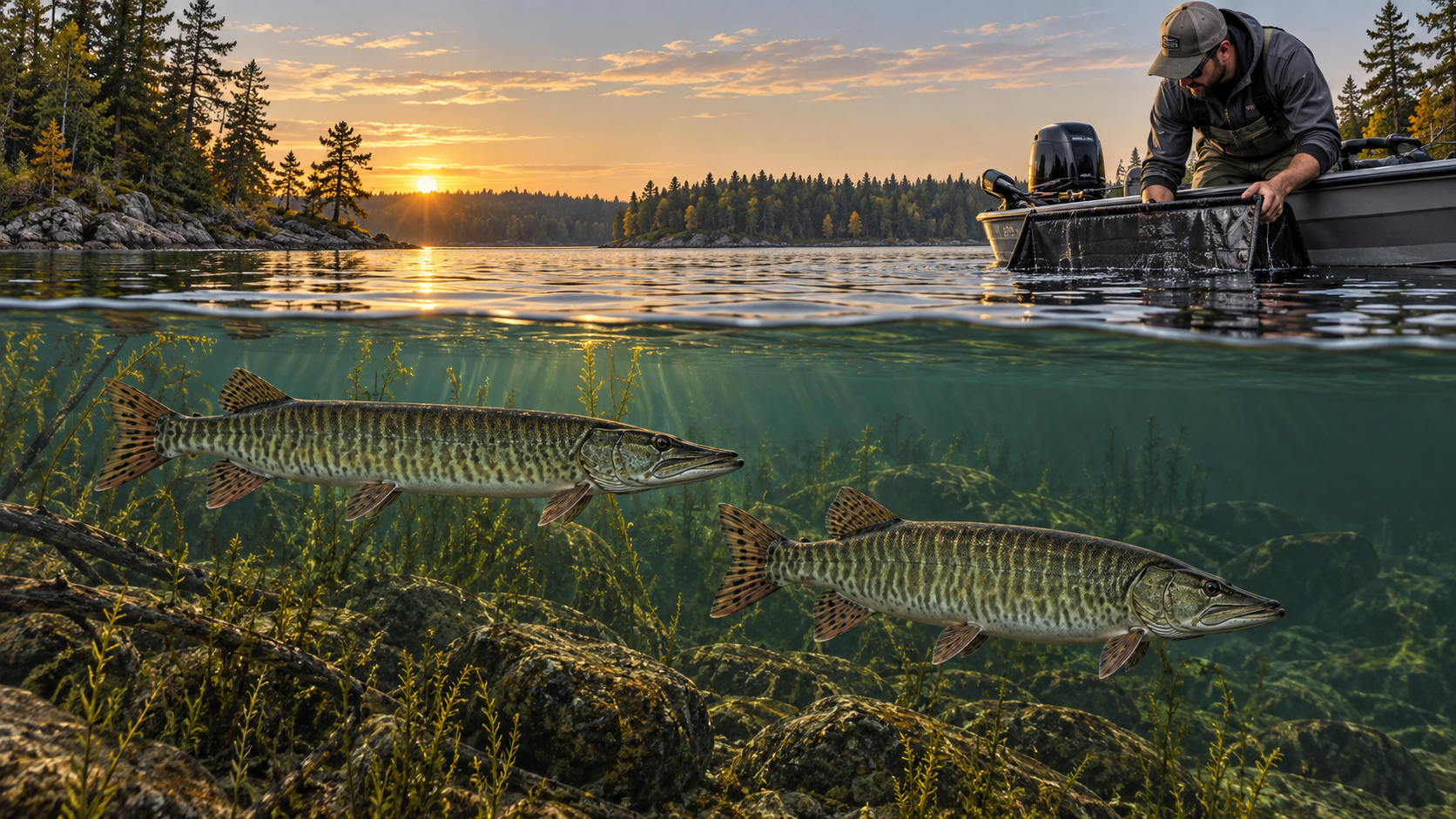
A Tape Measure Is Not a Birth Certificate
Length records a musky's growth outcome, not its birthday. Even trained age readers need the right structure, a known method, and room for error.
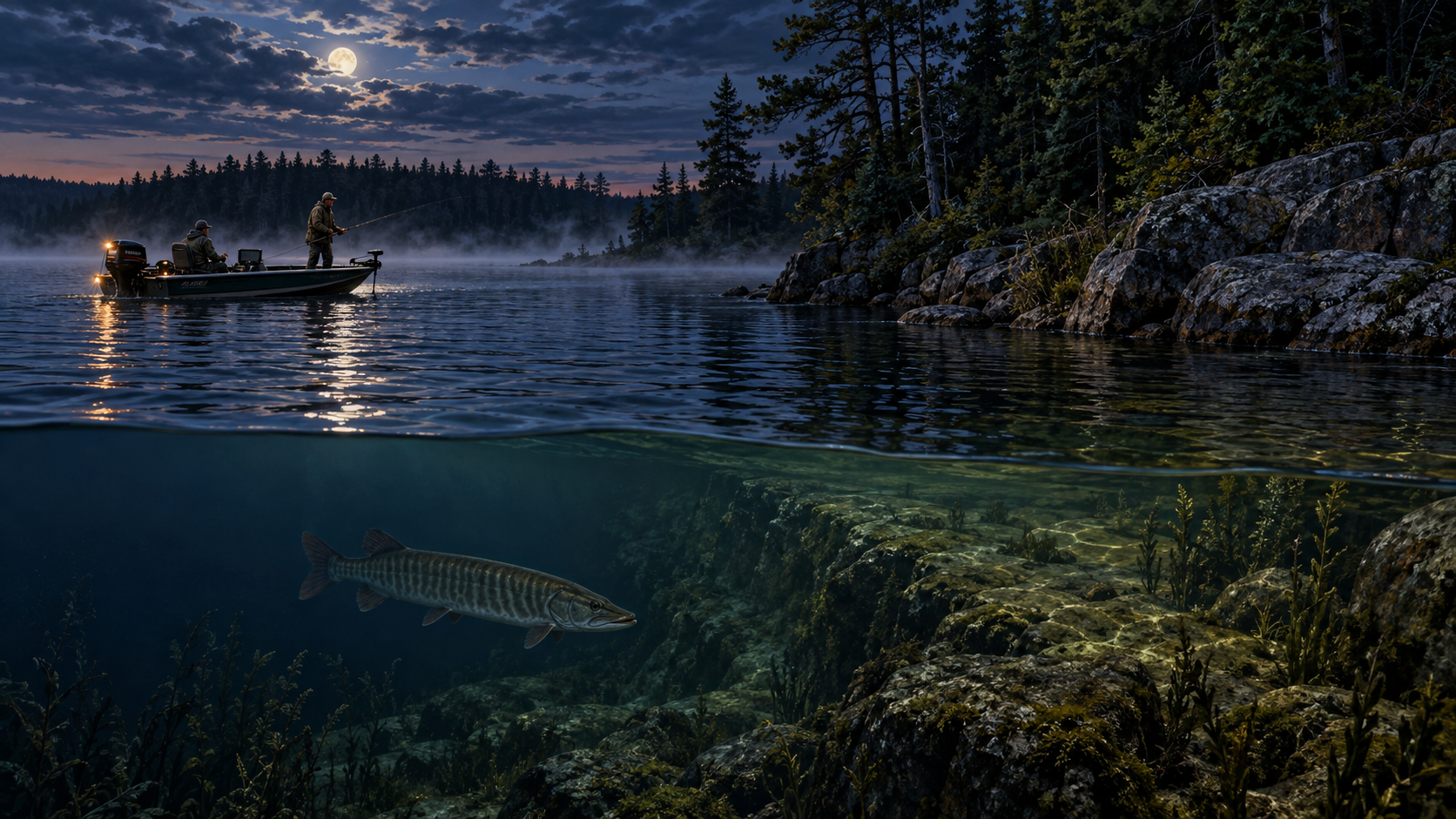
Put the Moon in the Log, Not in Charge
Large catch datasets show a lunar pattern in musky fishing, but the average edge is modest and tangled with effort, season, latitude, light, and angler decisions.
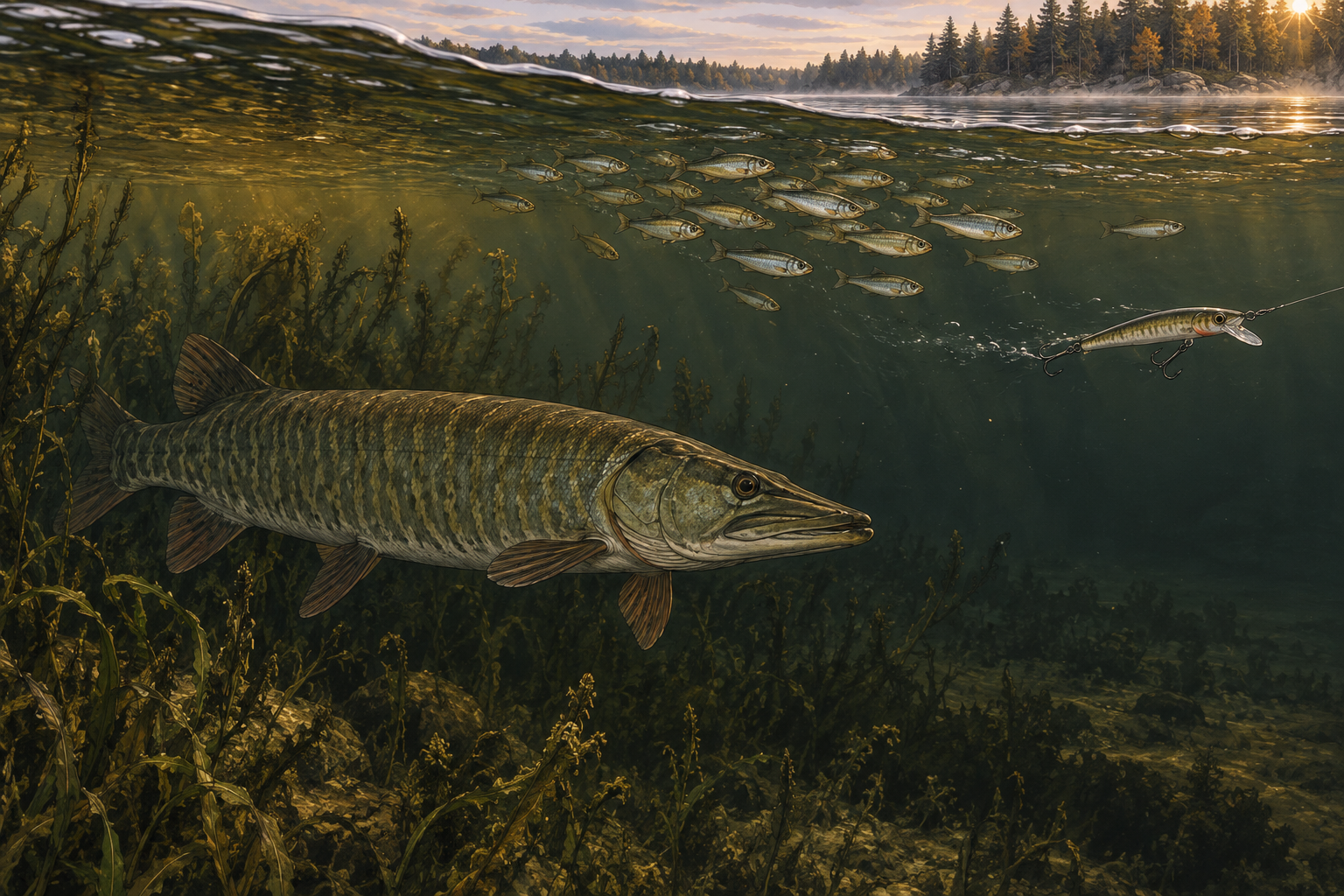
A Full Musky Can Make an Empty Day
A blank day does not prove a lake is empty. Controlled research shows that forage availability can change musky catchability even when fish are present.
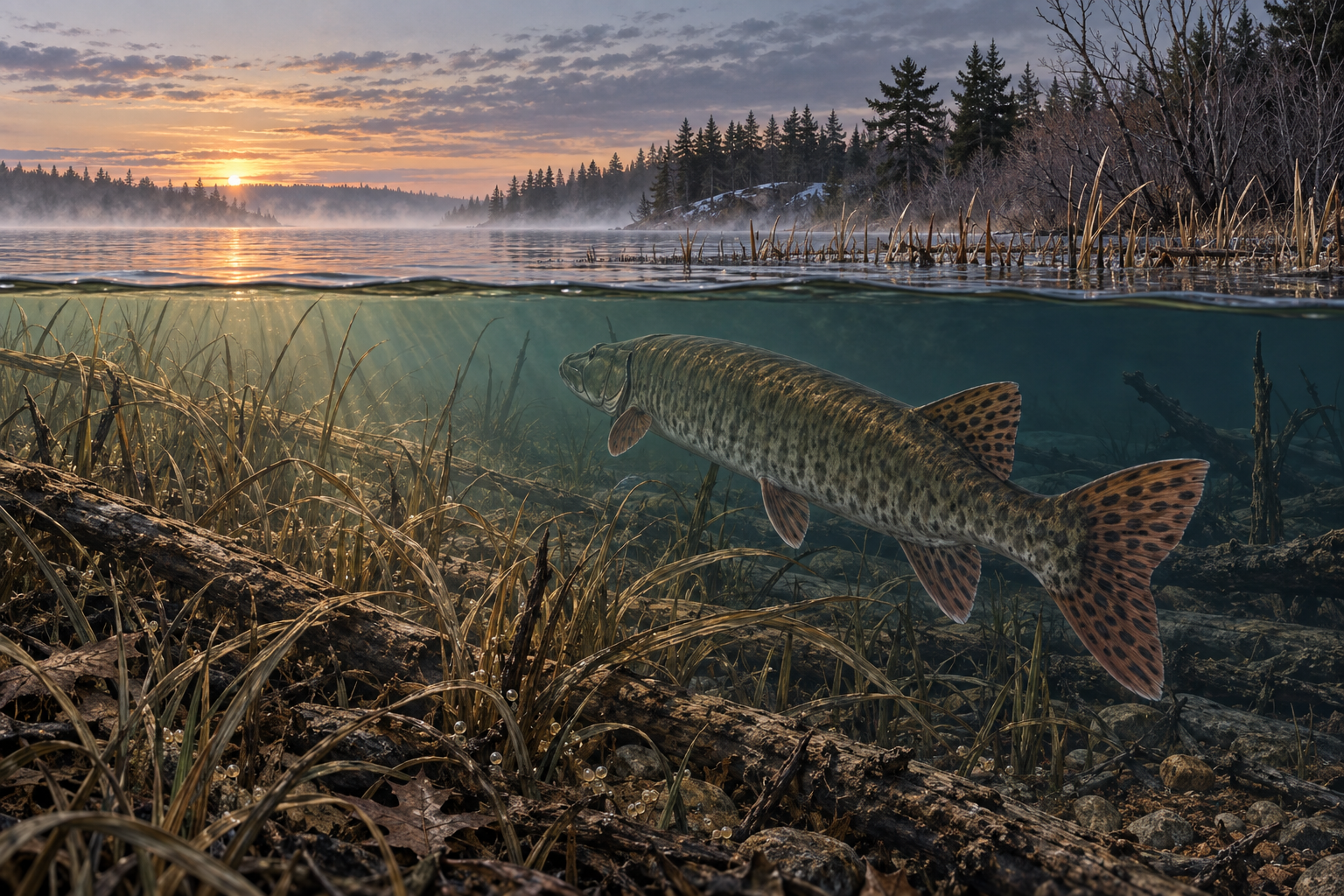
The Next Musky Generation Starts on the Bottom
A lake can hold adult muskies and still struggle to replace them. The bottleneck may be a thin band of shallow spawning floor and the perilous weeks between egg and young fish.
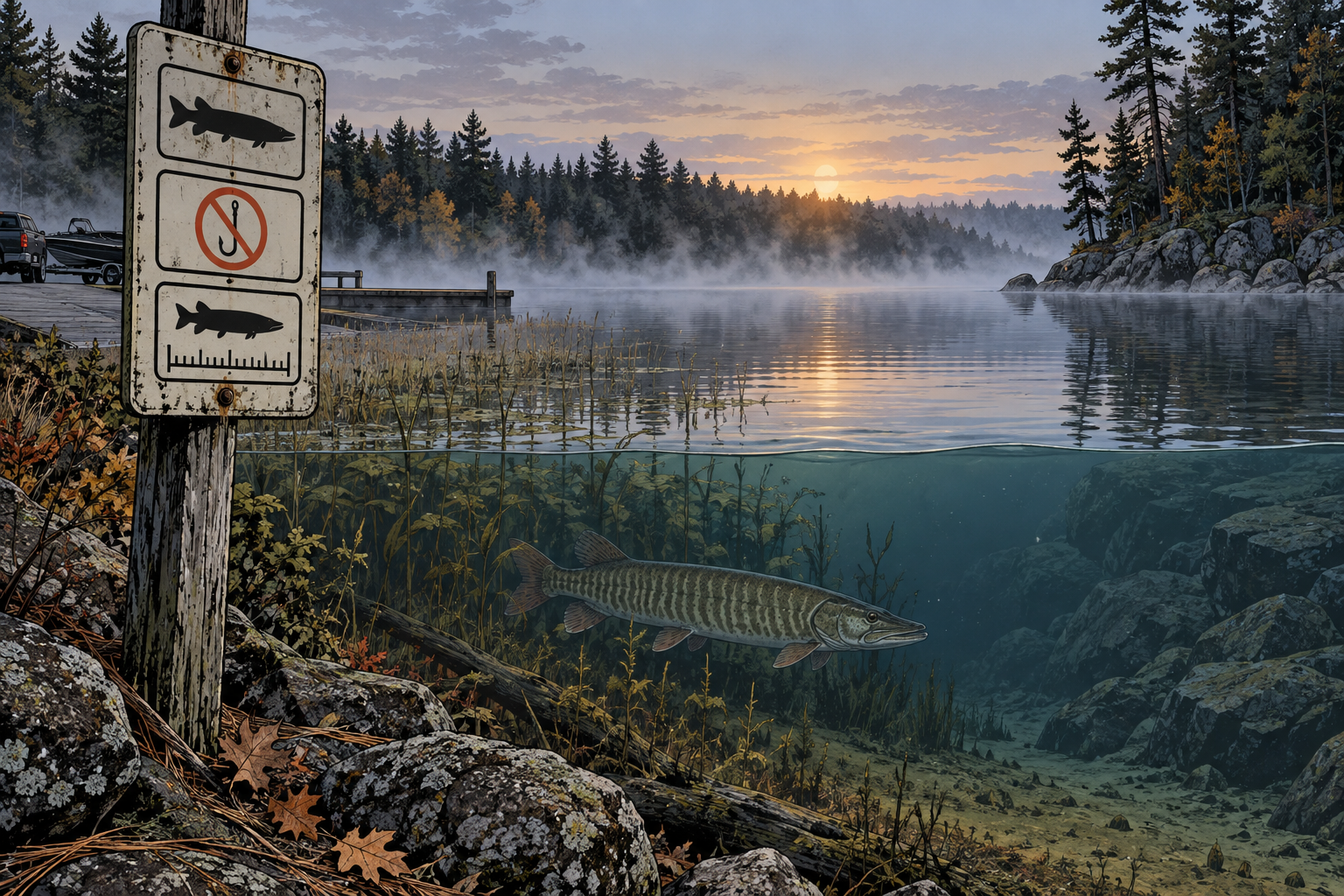
The Number on the Sign Is Not the Fishery
A 28, 40, or 50-inch limit tells anglers what may be kept. It does not reveal abundance, growth, recruitment, or the odds of seeing a musky.
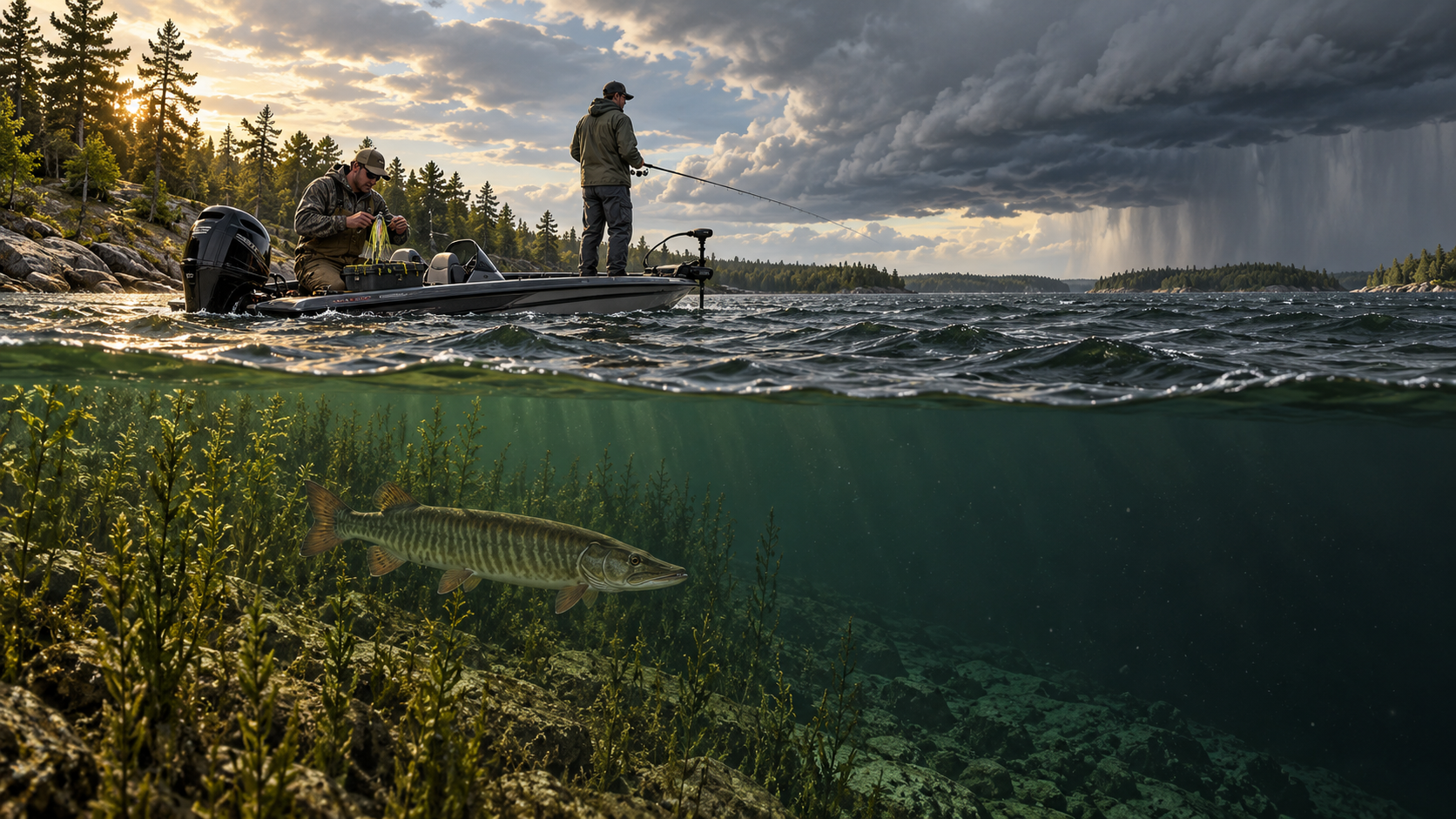
A Front Is a Bundle, Not a Bite Switch
Pressure, wind, light, temperature, and angler choices move together. Treating one reading as the cause makes a clean story and a weak fishing pattern.
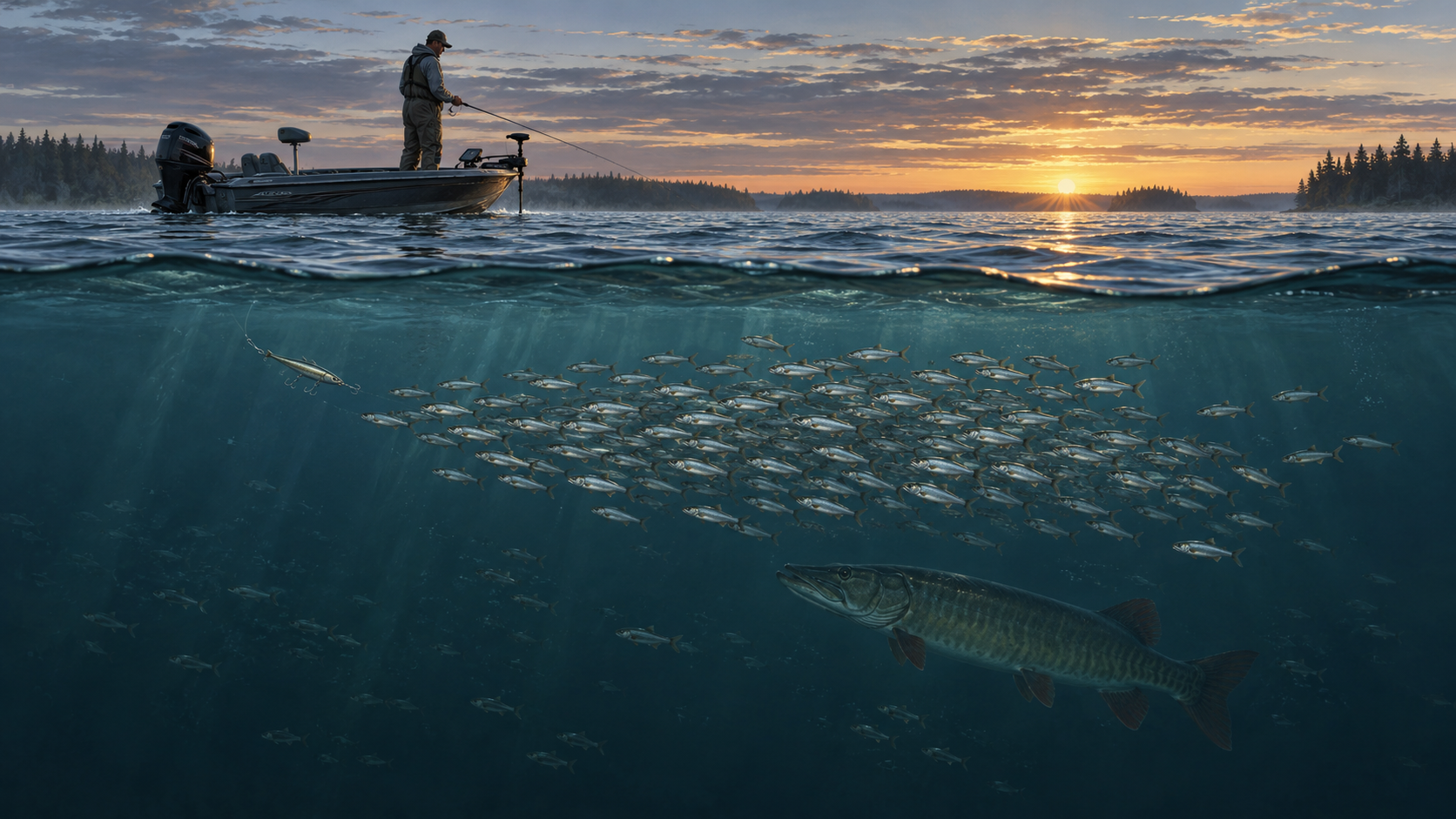
The Baitfish Are the Structure
When muskies leave the shoreline, the useful map is no longer made only of weeds and rock. It is made of depth, temperature, moving forage, and time.
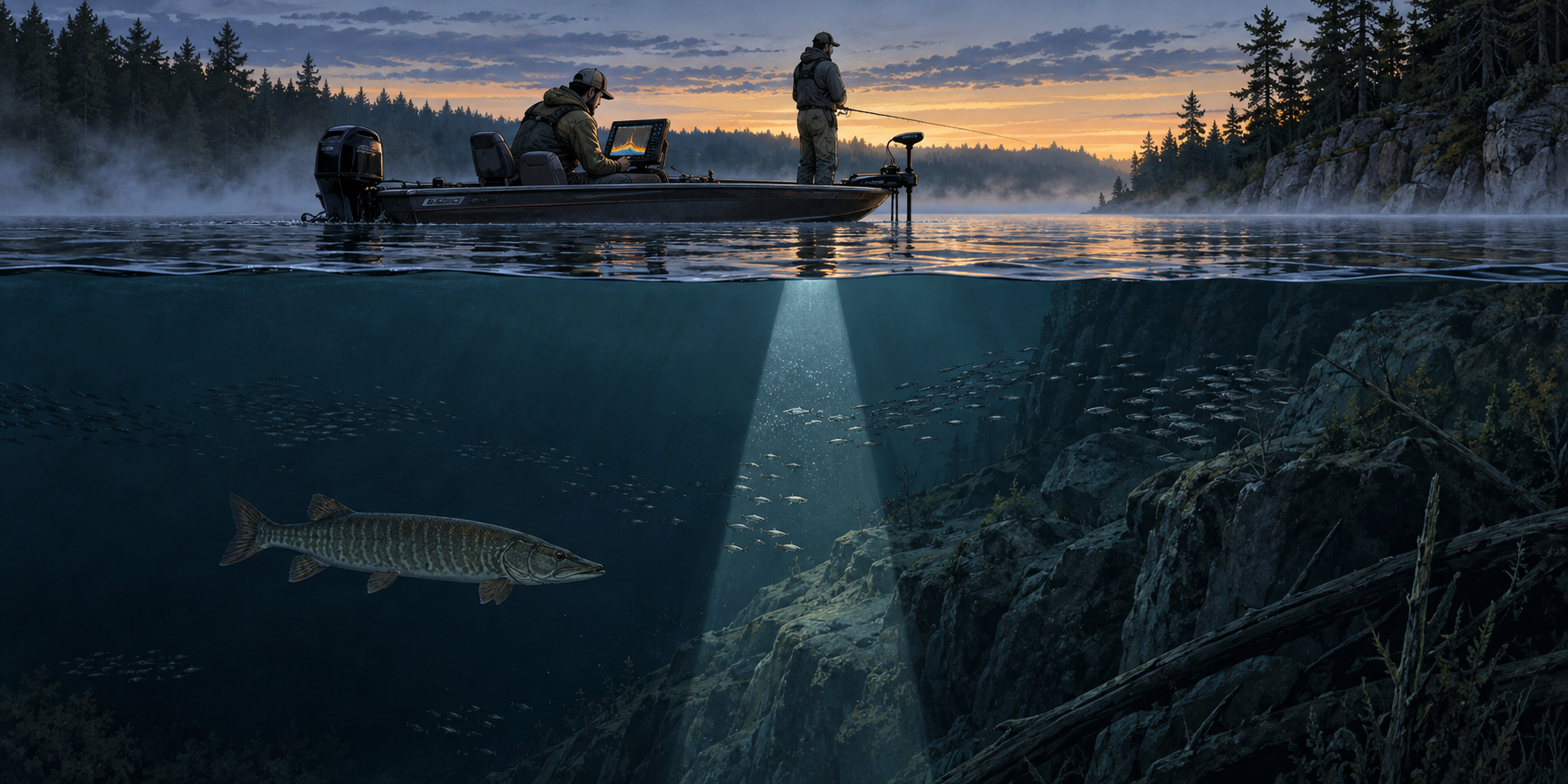
The Screen Is a Witness, Not a Verdict
Sonar can reveal depth, structure, targets, and movement. It still cannot tell you why a fish is there or whether the next cast is correct.
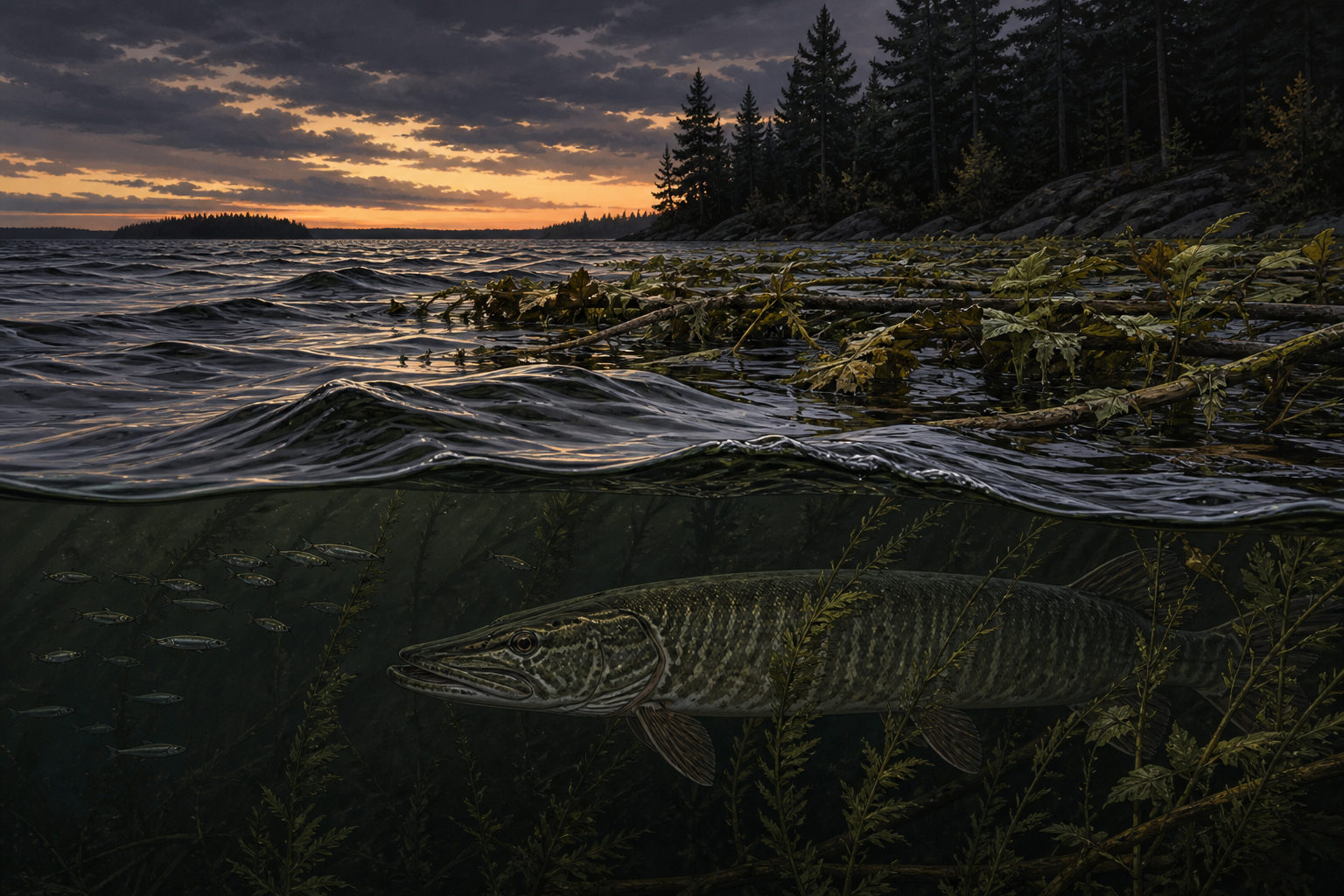
The Boat Reaches the Fish Before the Lure
Boat position decides the cast angle, running depth, closing speed, and boatside finish before the first turn of the reel.
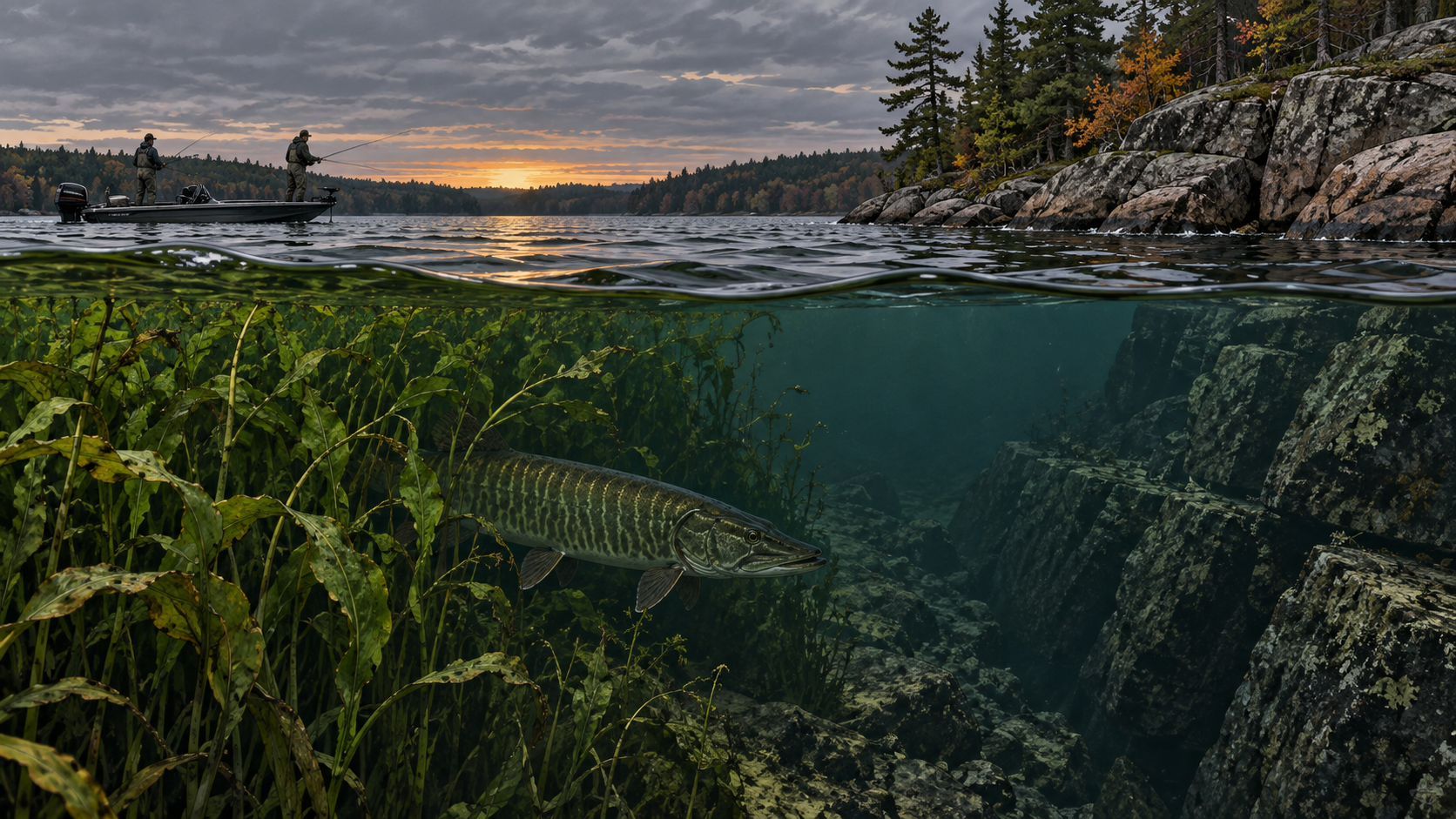
The Best Spot Has Two Addresses
Weeds and rocks are not rival patterns. The most useful water often begins where one kind of cover hands a musky to the other.
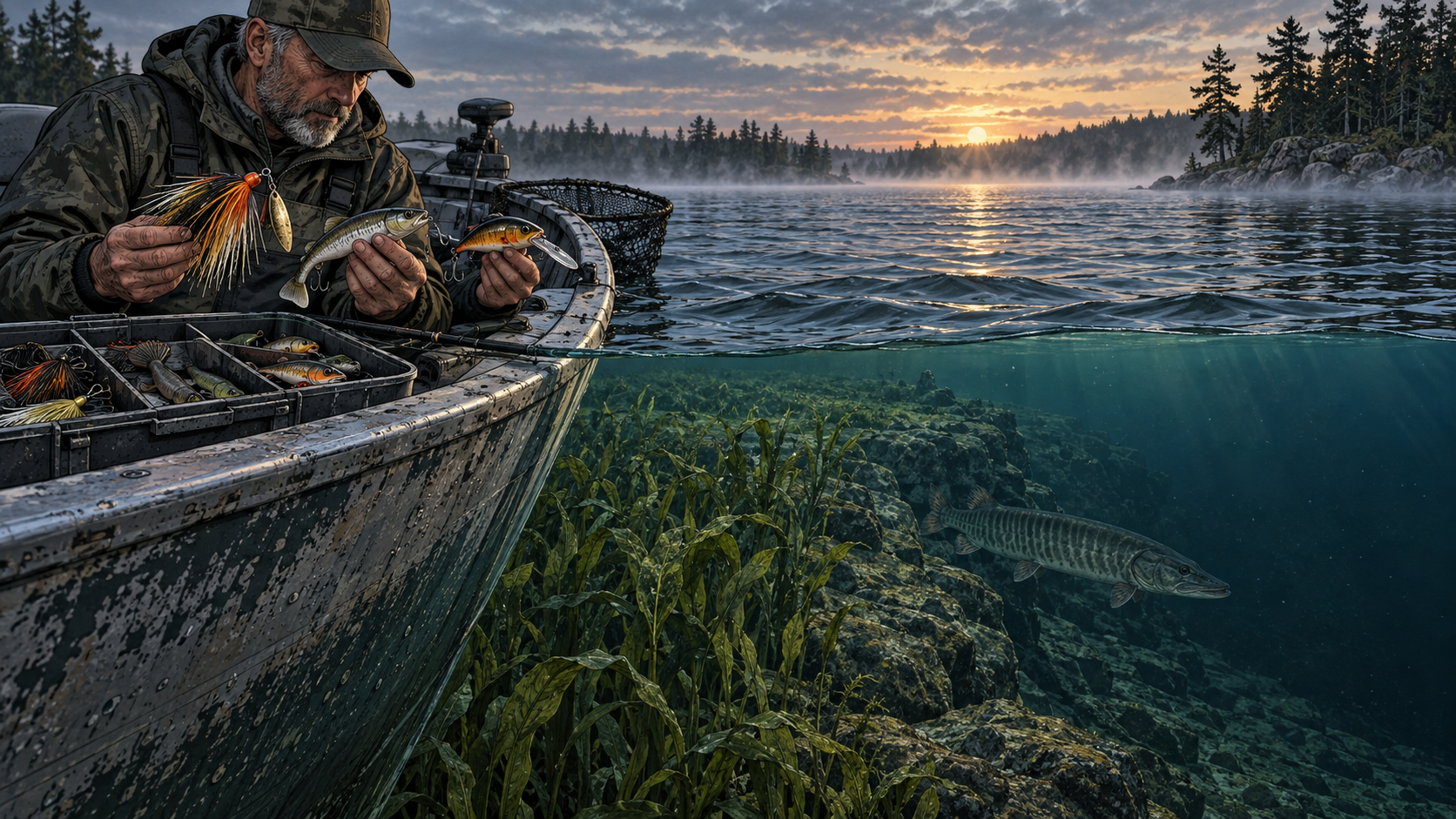
Choose the Job Before the Lure
A bucktail, crankbait, rubber bait, and topwater are not competing for the same cast. Each solves a different problem of depth, cover, speed, and control.
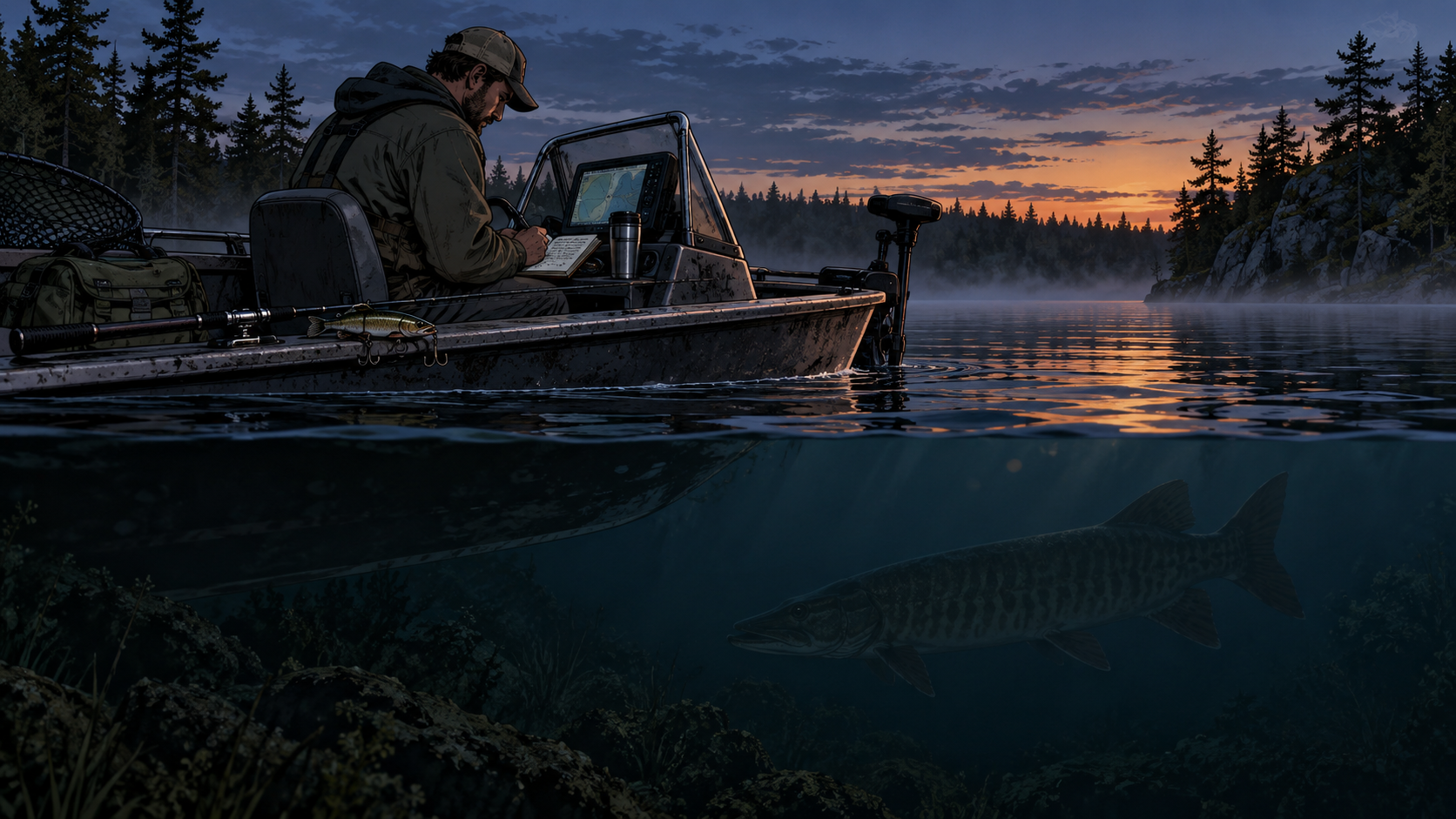
The Empty Hours Belong in the Log
A catch-only notebook remembers the fish. A useful musky log records the effort, refusals, decisions, and blank water that make the fish mean something.
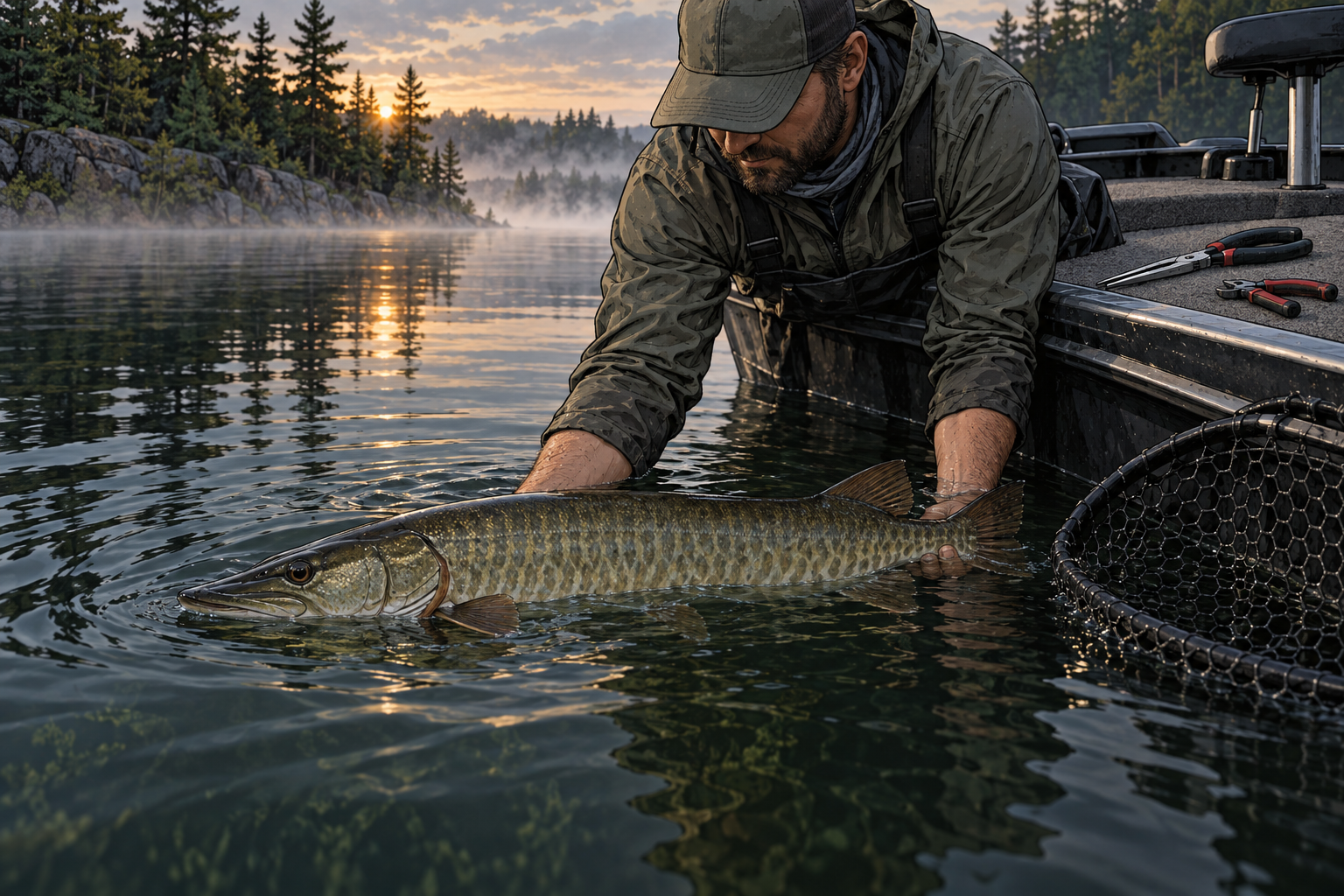
The Release Starts Before the Strike
A new field study found that long air exposure changed musky swimming for hours. The practical answer begins with tools ready before the first cast.
The Last Twenty Feet Count Twice
A following musky turns the end of a cast into a test of preparation: keep the lure working, open the turn, hold the depth, and change speed on purpose.
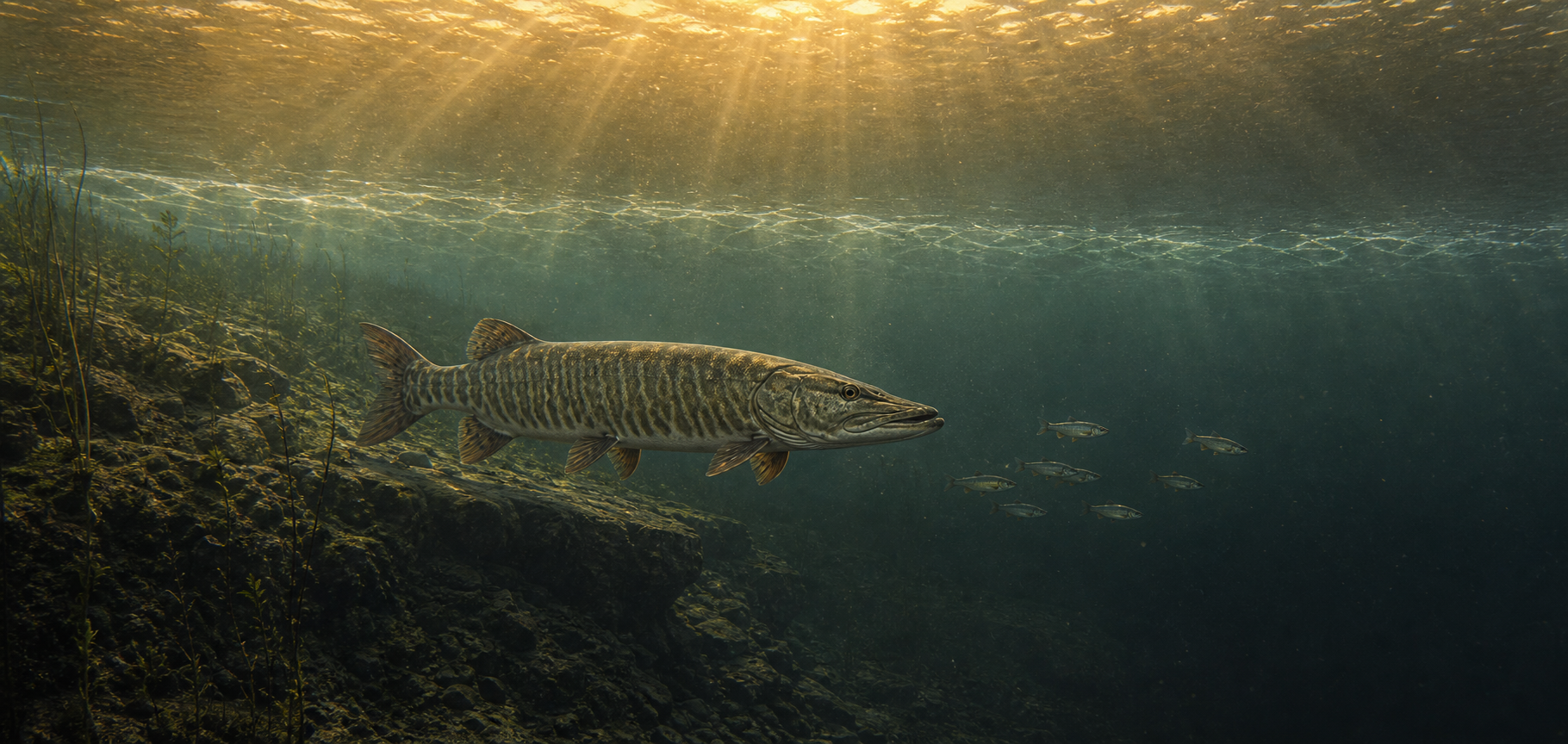
The Musky Calendar Is Written in Water
Spring, summer, and fall matter. But temperature trend, oxygen, forage, vegetation, and connected water decide what those seasons actually mean to a musky.
What an Action Fishery Really Means
The Eagle River Chain holds muskies at unusually high survey catch rates, but abundance is not the same thing as an easy fish.
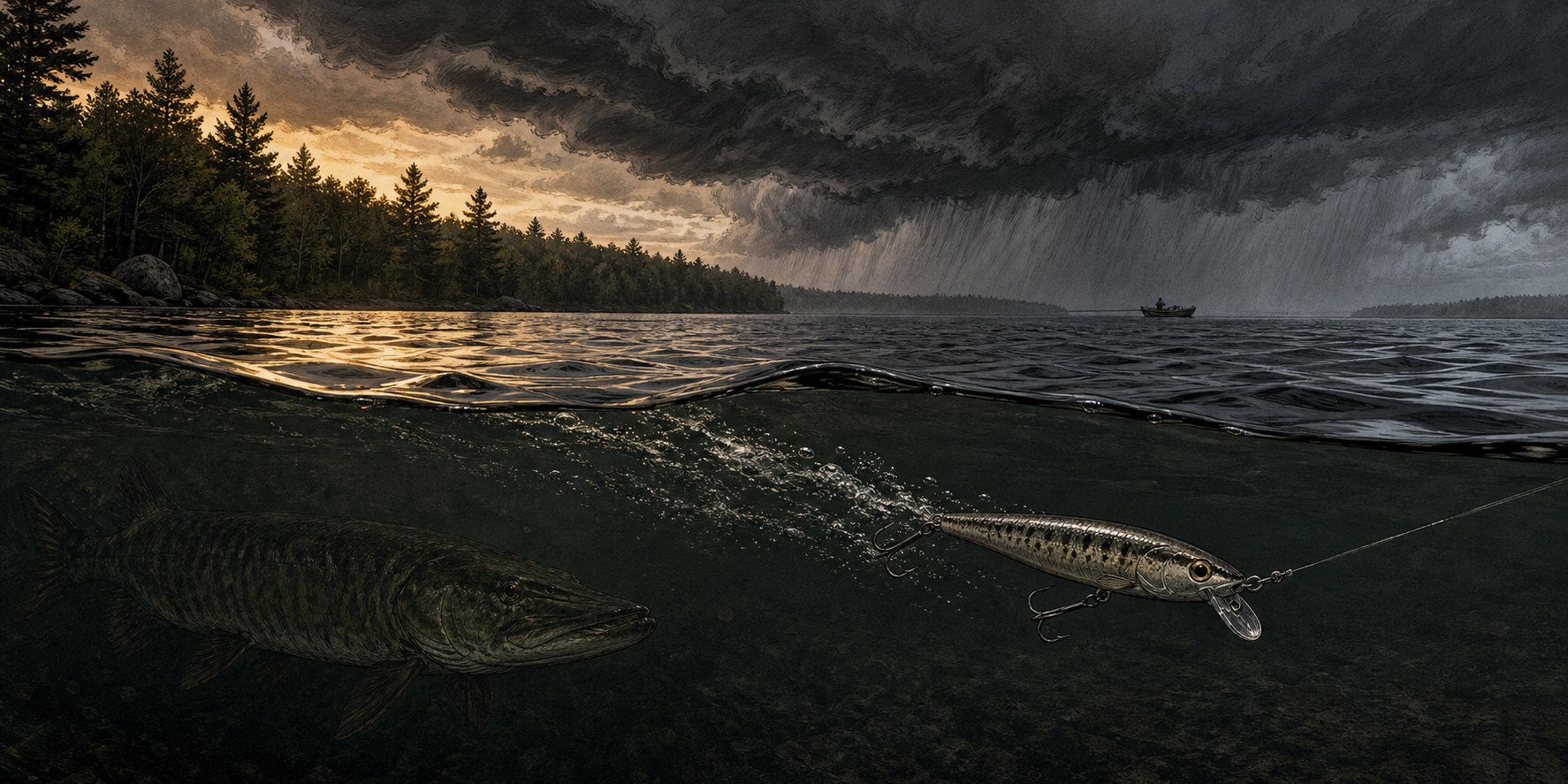
The Storm Window: September Heat Meets Moving Weather
Wait out the thunder, then test green weed edges, remembered followers, and the evening light on the Three Lakes Chain.
September Is Here. The Three Lakes Chain Has Not Gotten the Message Yet.
The calendar turned, but 71.7°F water, morning fog, and a warm afternoon keep the chain in a late-summer transition.
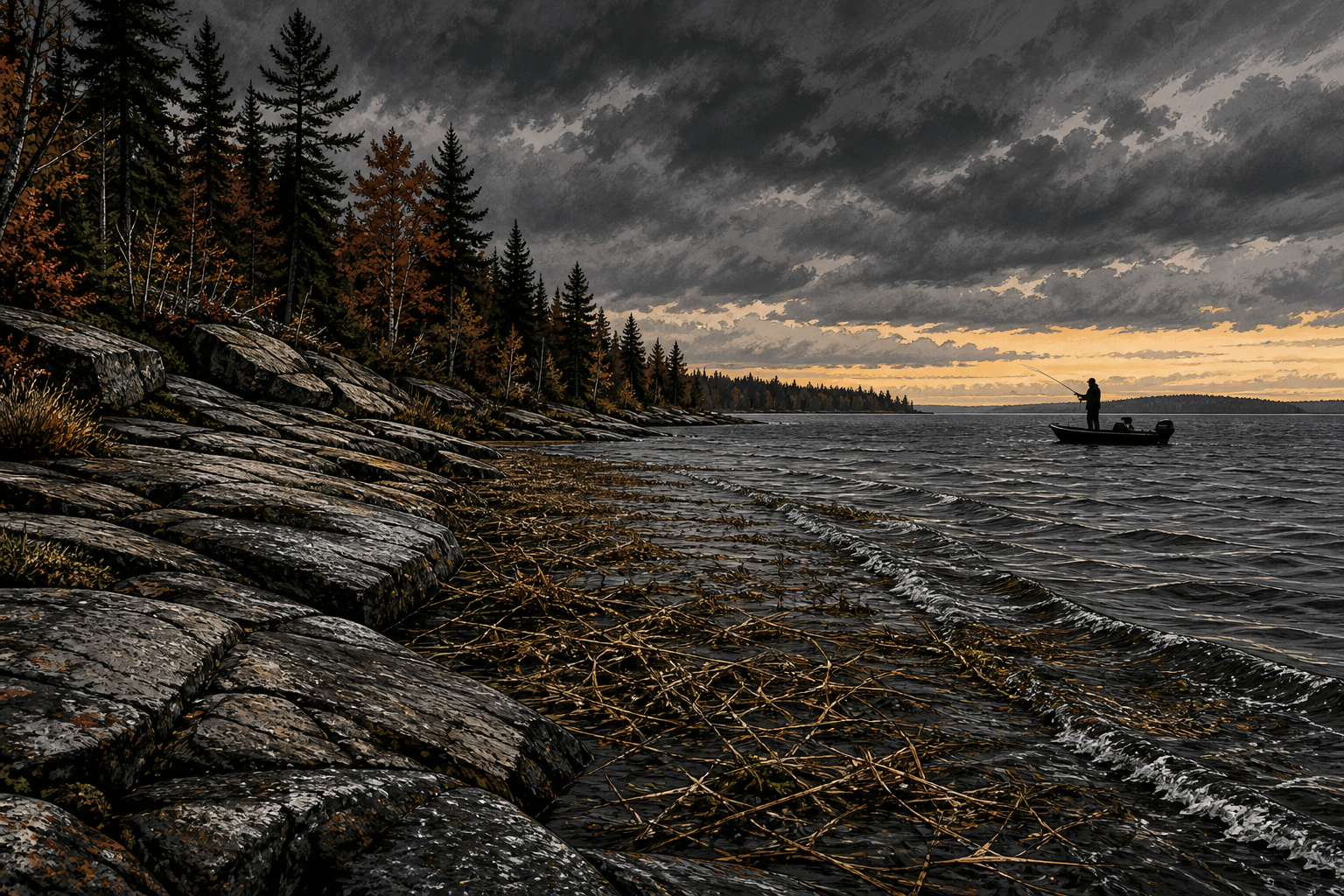
Late-August Cooldown: Reset the First-Light Pass
A Three Lakes field plan for separating a useful overnight cooling signal from the story anglers want a cold front to tell.
When the Northwest Wind Stacks the Weedline
A practical hypothesis for late-light fish on the loaded edge after a falling-pressure afternoon.
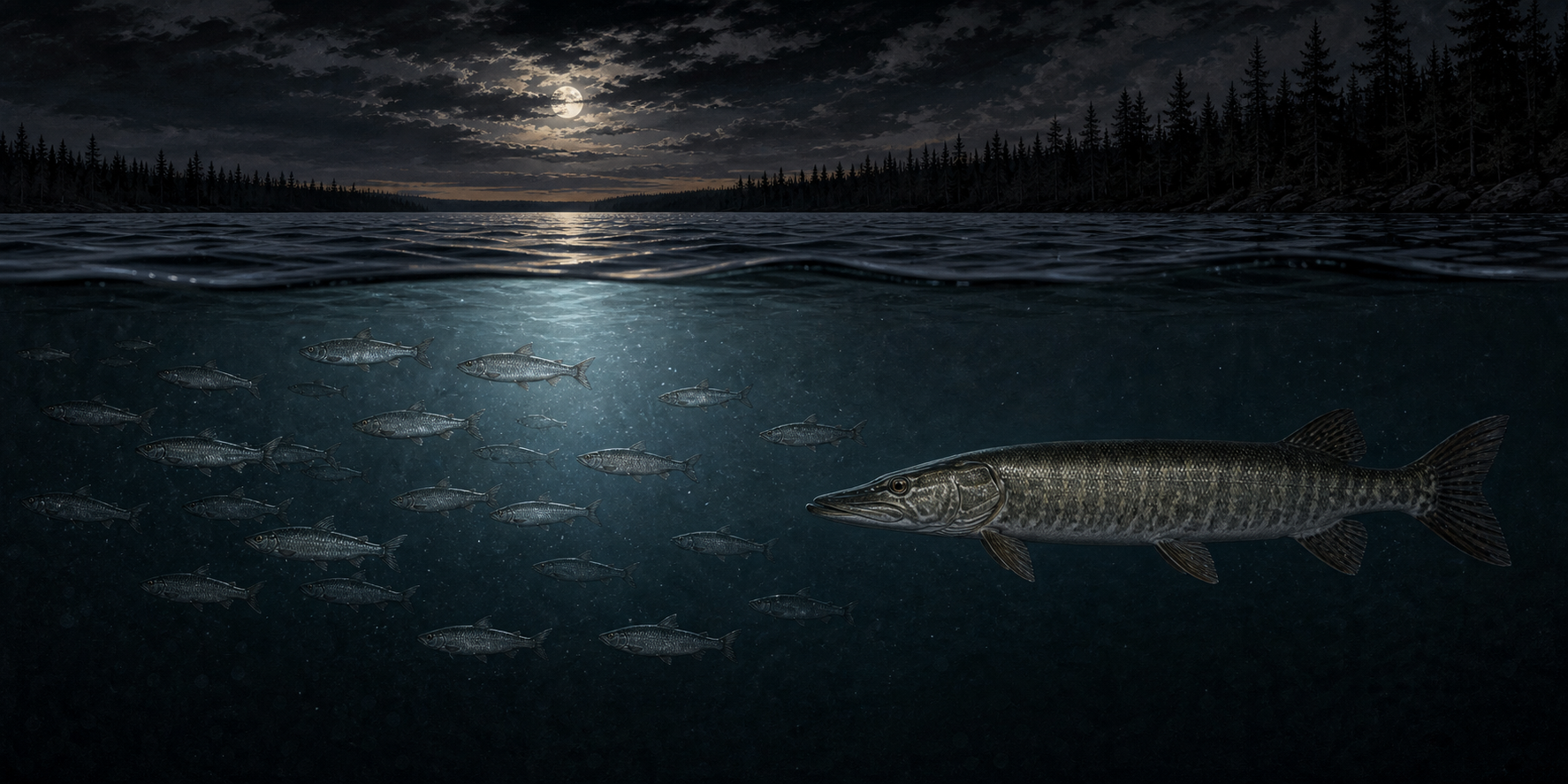
The Cisco Basin After Moonrise
Why open-water prey can matter more than the nearest weedline on clear, deep Three Lakes water.
Cold Front, Long Hang Time
A restrained fall presentation for rock-to-weed transitions when the surface temperature slides.
The Summer Oxygen Squeeze
Thermocline, dissolved oxygen, and why maximum lake depth is not the same as usable fish depth.
Barometer at the Storm Edge
What falling pressure can suggest, what it cannot prove, and how to keep a weather theory honest.