
The rule moved at both ends
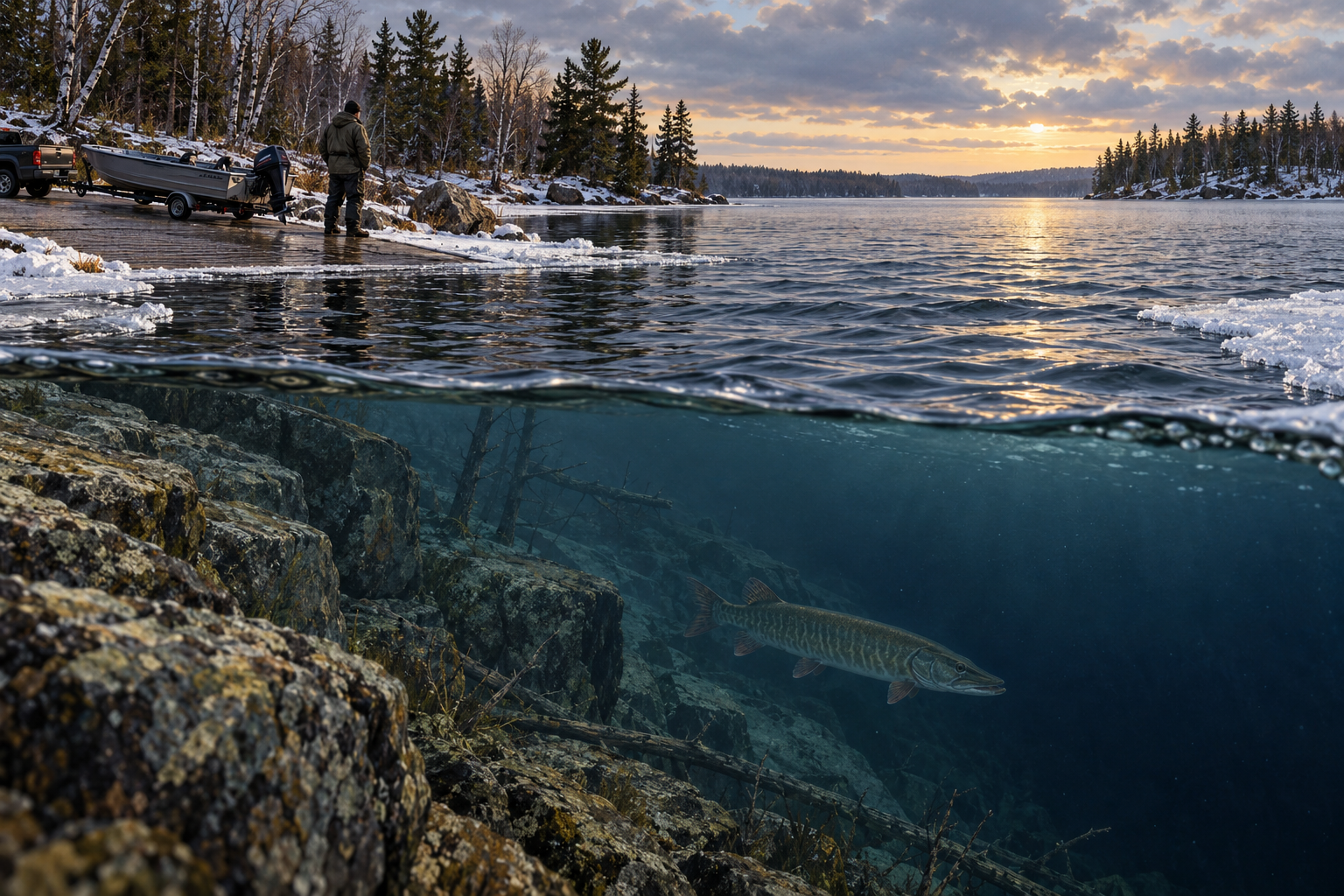
Wisconsin inland musky anglers are fishing under a different calendar in 2026. The statewide inland season opened May 2, the first Saturday in May, and remains open through December 31 on open water. For the first time in more than 40 years, northern and southern inland waters share one opener.
That is more than a spring change. Northern inland waters that historically closed at the end of November now have another legal month when open-water conditions remain. The words open water only matter. A date does not turn unsafe ice, an inaccessible ramp, or a frozen lake into fishable water.
The statewide inland rule also is not universal. Lake Michigan, Green Bay, Lake Superior, and Wisconsin's boundary waters retain separate season structures. Special waterbody and county exceptions still require a current regulation check before fishing.
Use the current regulation, not the remembered one
A live Wisconsin DNR outreach page still describes the former northern schedule, including the later May opener and November closing date. The current season table and the 2026-2027 regulation-change page list the new statewide inland dates.
That conflict is a useful warning about fishing information. A government page can remain online after the rule it describes changes. A screenshot, an old digest, or a familiar annual routine is not enough when the current regulation page says something different.
Before a late trip, verify the species season, the water's jurisdiction, special county rules, minimum length, bag limit, and any access restriction from current official sources. Save the source and the date checked with the trip record.
The management argument begins with harvest history
Wisconsin created the shorter northern season in 1984 when a 30-inch minimum and limited catch-and-release practice produced far more harvest. The DNR says statewide annual harvest then exceeded 65,000 muskies. Modern musky fishing operates under a very different conservation culture and a 40-inch statewide inland minimum, with larger limits on some waters.
The agency reports only three harvested muskies documented across 161 creel surveys on musky waters since 2016. That does not mean three fish were harvested statewide. Creel surveys sample angler activity and are used to estimate harvest beyond the observed interviews.
The DNR's decision therefore is not a claim that season length never matters. It is a judgment that the original harvest concern has weakened enough for a uniform season, paired with a plan to keep measuring harvest and population abundance.
Spawning follows water, not opening day
Wisconsin DNR places musky spawning from mid-April through mid-May, with an optimum near 55 degrees Fahrenheit and a reported range of 49 to 60 degrees. That range can overlap an early-May opener in some years and waters. The calendar cannot guarantee that every fish has finished spawning.
A 2021 catch-and-release experiment with anadromous northern pike found no impairment in artificial fertilization or egg incubation after authentic angling during the period when females were developing eggs. Pike are close relatives with similar spawning behavior, but that experiment is not a direct test of wild Wisconsin muskellunge recruitment under the new season.
The important limit is scale. A captured adult can survive and still experience stress. A lake can complete spawning while recruitment fails later because eggs, larvae, habitat, oxygen, water level, or predation become the bottleneck. Earlier legal opportunity does not make every reproductive question disappear.
Cold water lowers one risk without erasing all risk
The DNR cites low delayed mortality in properly handled muskies and notes that cooler spring temperatures reduce thermal stress. That supports careful catch and release during added cool-water days, but it does not make handling time irrelevant.
Experimental work on adult muskellunge found that mortality rose with cumulative warm conditions and longer net time. The study focused heavily on warm-water risk and cannot be converted into a late-fall mortality rate. Its practical message still travels: temperature and time in the net belong in the same release record.
Late season adds a different set of hazards. Cold air, ice on the deck, stiff equipment, inaccessible ramps, short daylight, and delayed emergency response can affect anglers and fish even when warm-water physiology is no longer the main concern.
Permission is not a forecast
A December 31 closing date creates opportunity only where safe open water and usable access exist. It does not predict when a specific lake will freeze, whether a ramp will be maintained, or whether a cold snap will make a planned return impossible.
That makes late-season planning a go-or-no-go decision before it becomes a fishing pattern. Verify official weather and marine forecasts, inspect access in daylight, carry cold-water safety equipment, file a float plan, and leave when freezing spray or new ice changes the route home.
Musky Moon does not have a current field-measured water temperature for all Wisconsin inland waters. A surface reading from one lake or one afternoon cannot stand in for a statewide condition. Unknown remains the correct value until a relevant measurement exists.
Measure the added days as effort, not just catches
The first useful question is not how many more muskies were caught. It is how much fishing actually moved into the added portions of the season. Record angler hours, boat counts, launch availability, open-water extent, water and air temperature, ice trend, contacts, captures, harvest, and handling time.
Compare the added early and late windows with matched days from the traditional season. Separate waters by natural reproduction, stocking dependence, access, size regulation, and fishery class. One warm December weekend on a popular lake should not be treated as the statewide effect.
The effort-distribution theory gains support if angler hours and captures consistently migrate into early-May or December open-water windows. It loses support if weather and access keep participation near historical levels, or if added effort merely replaces trips that would have occurred later.
The rule comes with a test
Wisconsin DNR says it will continue standardized creel surveys, review harvest annually, and track temporal trends in musky abundance. The agency identified a management trigger: if the six-year running average of total harvest consistently exceeds its 237-fish annual benchmark for three consecutive years, it will return to the Natural Resources Board with a proposal to shorten the northern inland season.
That monitoring plan is evidence that the change is not a permanent biological conclusion. It is an adaptive management decision with measurable conditions that can support, refine, or reverse it.
Anglers can help by treating the new days as data instead of entitlement. Check the current rule, record real effort, handle fish efficiently, respect access and ice, and let several years of evidence decide what the longer season actually changed.