
The barometer is a clock, not a waypoint
A falling barometer is one of musky fishing’s most repeated pieces of advice. It is also easy to misuse. Pressure can help describe a changing weather window, but the number on a screen does not tell you which point to fish, how deep to run a lure, or whether forage is present.
Think of the barometer as a clock. It can tell you that conditions are changing and that you may want to be on your best water before the front arrives. It cannot replace the location work. The cast still needs a reason: a weed edge, current seam, rock transition, basin lip, or school of prey.
Choose the spot before the window opens
On a large, complex lake such as Planting Ground, identify two or three compact areas where habitat types meet. A wind-facing island saddle, the end of a cabbage point, or a break near an inflow gives a musky several ways to use one small piece of water. Those are better storm-window targets than a long shoreline with no defined contact.
Make an ordinary pass before the weather changes if time allows. Note where the weeds end, which direction the wind is pushing, and whether forage is visible. When the pressure begins to fall and the sky darkens, you can return with a precise route instead of racing around the lake looking for a dramatic-looking cloud.
Fish the change you can actually observe
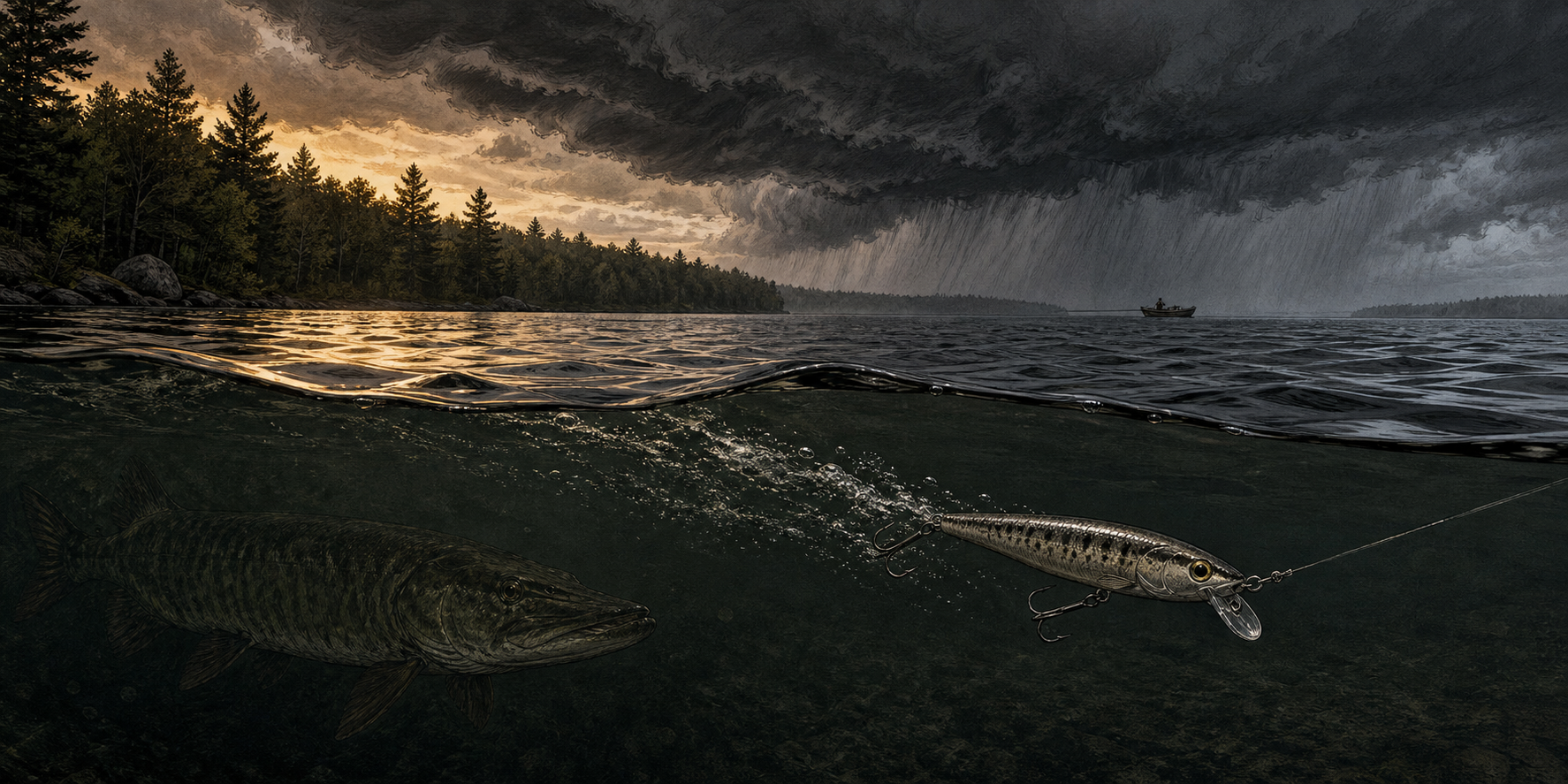
Watch for the conditions that arrive with the pressure trend: increasing wind, darker sky, a temperature drop, rain, or a shift in light. Those changes affect how you position the boat and present the lure more directly than the barometer alone. A strengthening wind may load one side of a point. Lower light may let fish move farther from cover. Heavy rain may reduce visibility and demand more vibration.
Begin with the lure and cadence that already suit the habitat. If fish appear more willing to move, increase speed or use a bait that covers the contact zone efficiently. If the front arrives with cold rain and a hard temperature drop, shorten the search and make the easiest possible presentation through the best part of the spot.
Record the details that matter
A useful field note is short and specific. Record the pressure trend, wind direction, cloud cover, surface temperature, location type, lure depth, follows, and actual contacts. Also record what contradicted your expectation. A fish on the protected side of an island during a falling barometer may teach you more than three follows that fit the story you wanted to tell.
Over time, these notes help separate a real local pattern from selective memory. One fish does not prove that every falling barometer activates every lake. Repeated observations in the same kind of habitat are more useful, especially when you also preserve the trips that produced nothing.
Safety ends the fishing window
The weather window is over when the lake becomes unsafe. Lightning, rapidly building wind, poor visibility, and cold exposure are not variables to fish through. Check the forecast before leaving, keep a clear route to shelter, and get off the water early enough that the decision is still easy.
The best use of a falling barometer is preparation. Put yourself on a proven habitat intersection while the change is still manageable, fish it with purpose, and leave when the weather says to leave. Pressure can sharpen your timing, but structure, forage, observation, and judgment still do the real work.