
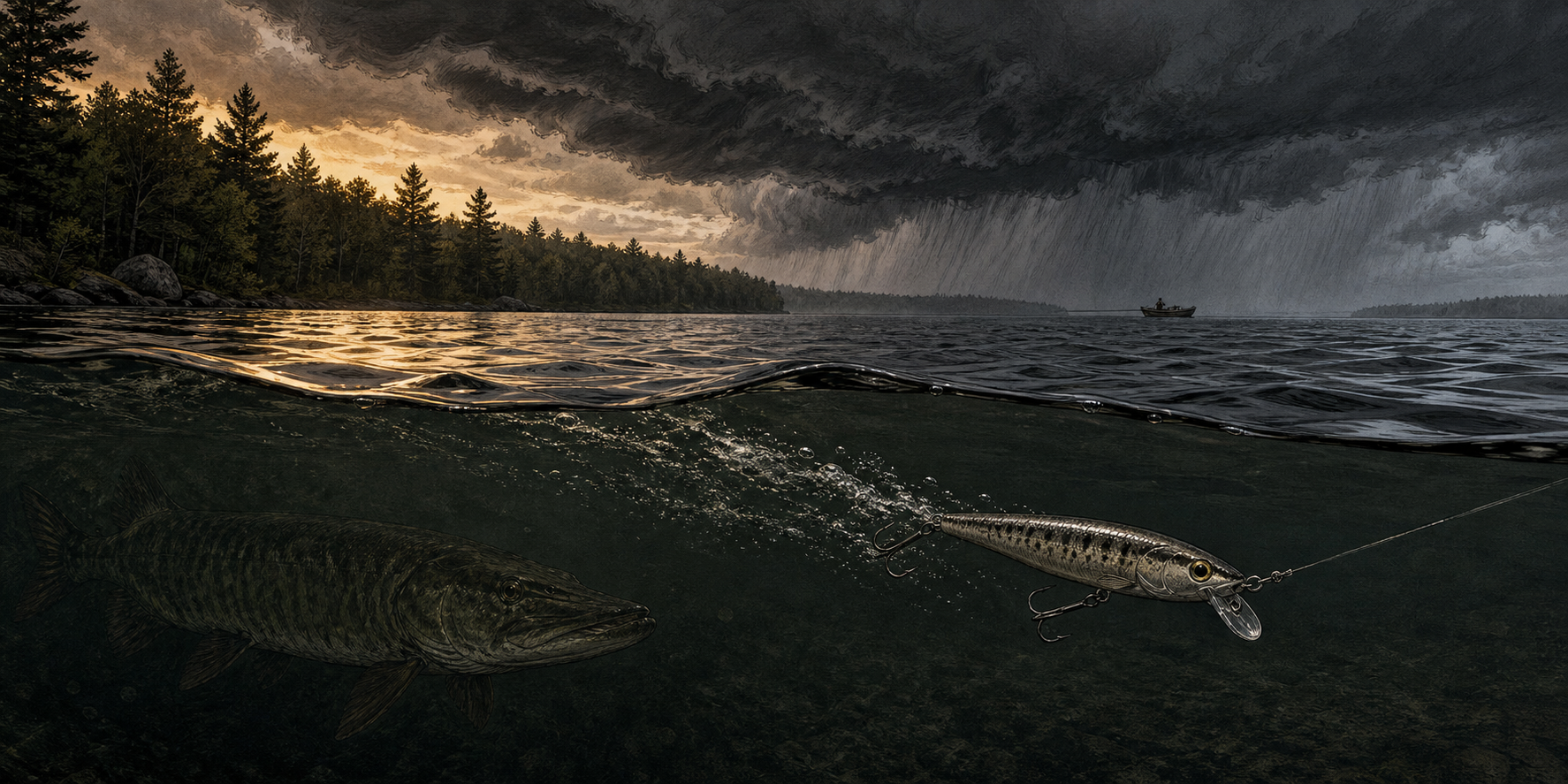
The storm comes first
September 2 started loudly in Three Lakes. Thunderstorms were over the Northwoods in the morning while the temperature sat in the low 60s, with much warmer air expected later in the day.
The first instruction is the simplest and most important one: stay off exposed water while thunder or lightning is active. The useful fishing period begins only after the storm has safely moved away.
The chain is still running a late-summer pattern
The latest Three Lakes Waterfront Association sensor reading available for this report showed 71.7°F water on the previous morning. Because that reading was nearly a day old, it belongs in the record as context, not as proof of the temperature on every lake today.
That reading agrees with the latest regional field report, which described Northwoods water in the low 70s and muskies moving from deeper summer positions toward shallow weed edges and shorelines. The calendar says September. The water still says late summer.
Start where green weeds meet an exit route
After the storm clears, begin on healthy weed edges with quick access to deeper water. Points, inside turns, channel entrances, narrows, and saddles deserve the first passes because they let a fish move between shallow cover and a safer depth without crossing empty water.
Use a bucktail, swimbait, or another moving presentation to learn whether fish are active on the edge. The first pass is a search. Its job is to find life, not to prove that every fish is shallow.
Remember the follower and return slower
If a musky follows without eating, save the exact location, angle, lure depth, and time. That fish may be more valuable later than it is during the first pass.
Return with a slower jerkbait, rubber bait, or reduced blade cadence after the spot rests. Recent regional reporting specifically identified slower presentations as useful for reluctant fish around changing fronts.
The best working window
Musky Moon gives the late-afternoon-to-sunset period the highest rating, roughly 5:15 to 7:45 PM Central. Declining light, recent shallow fish reports, and the earlier weather disturbance create a reasonable case for being on the best edge before sunset.
This is a model judgment, not a measured catch probability. There is no live musky telemetry, baitfish map, or complete local catch history proving the window. Record what happens so the model can gain or lose confidence.
Record the moon. Do not let it run the plan
The waning gibbous moon belongs in the database, but it does not override water temperature, wind, light, prey position, or the storm. Musky Moon will increase lunar weight only if accumulated Three Lakes results show that it improves predictions after those other variables are controlled.
Watch the seventy-seven-degree line
Catch-and-release research found substantially greater muskellunge mortality when fish were angled at 25°C, about 77°F, or warmer. The latest local reading was below that mark, but today's actual surface temperature should still be checked on the boat. Keep fight, net, and handling time short.
Today's plan is direct: wait out the thunder, find green weeds connected to deeper water, search quickly, remember followers, return slower, and be in position when the light begins to fall.